Gas Safe registered
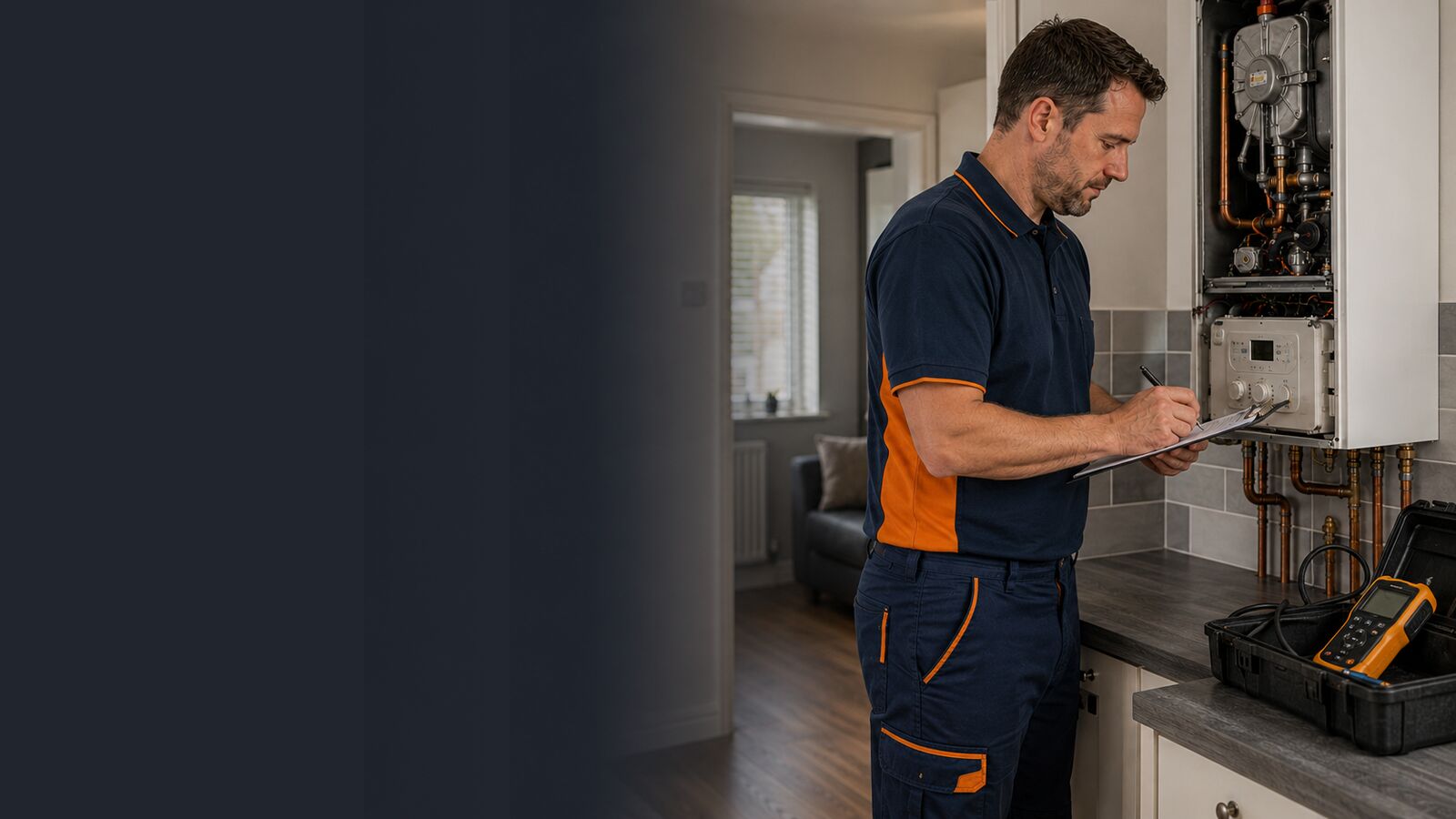
CP12 for landlords and agents
Every gas appliance and flue checked, the record issued the same day, and the dates set so you keep your renewal anniversary. Gas Safe registered, portfolios and single lets.
Answered 24 hours a day by a technical customer service member.
Most pages on this subject still say a missing record blocks an eviction. That stopped being true on 1 May 2026, and the section below sets out what replaced it.
Certificate expired or expiring this week? Call 0203 868 6134. We will tell you the earliest realistic slot rather than the one you want to hear.
Two details to start. Tell us how many properties and how many gas appliances in each, and we can be specific.
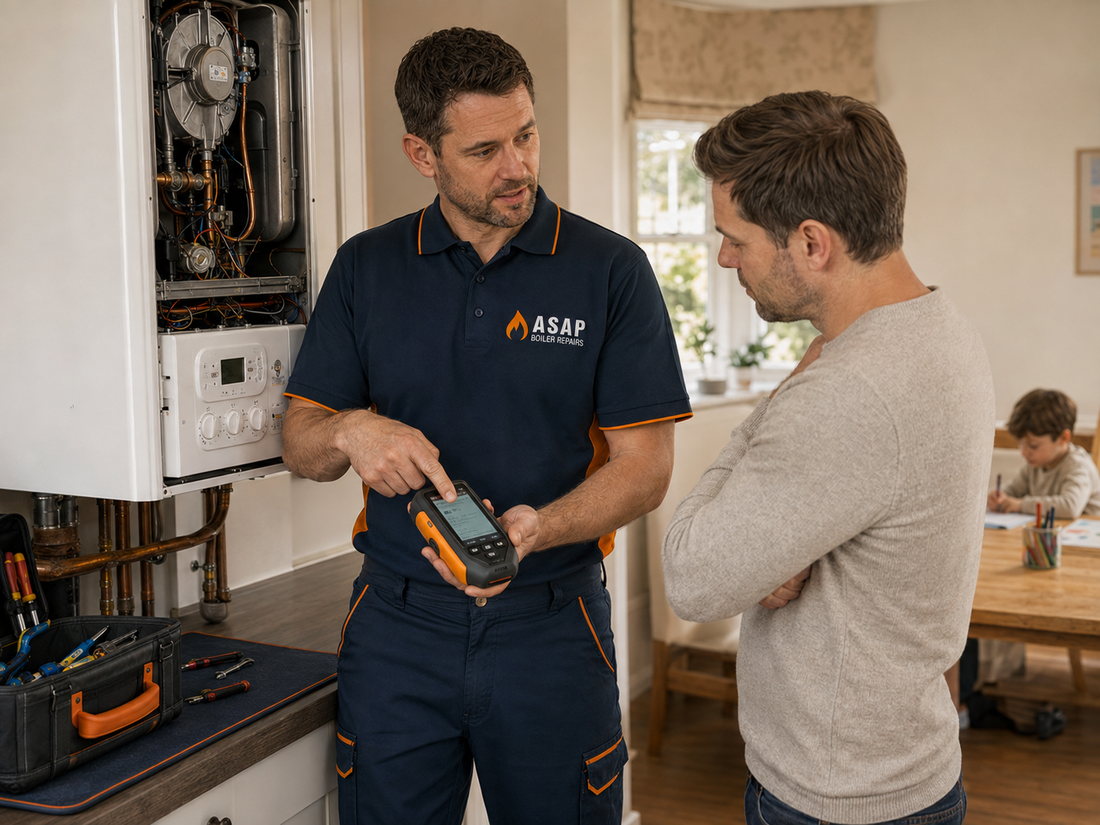
Three steps, and you will know where you stand before an engineer is booked.
If an appliance fails, we will tell you before we condemn it. A failed check with a capped appliance and no explanation is how a routine renewal turns into a furious tenant and an emergency. You get the finding, the options and the cost on the phone first, wherever it is safe to do that.
Four obligations, all from regulation 36 of the Gas Safety (Installation and Use) Regulations 1998, and none of them has changed.
| Obligation | The detail |
|---|---|
| An annual check | Every gas appliance and flue you are responsible for, at intervals of no more than twelve months, by a Gas Safe registered engineer |
| The record to existing tenants | Within 28 days of the check being carried out |
| The record to new tenants | Before they occupy the property, not afterwards |
| Keep copies | For two years from the date of the check |
On the name. The regulations do not use the words CP12 at all. They call it a landlord gas safety record. CP12 was a form number from the old CORGI days that stuck, and it is what everybody still searches for. Same document, two names, and an agent who insists on one or the other is telling you nothing about the work.
What you are responsible for. The appliances and flues you own or provide. A tenant's own gas cooker is theirs, but the installation pipework and the flue serving it remain yours, which is the part landlords most often miss. If you are unsure which is which in a particular property, say so on the phone and we will work it out before the visit rather than during it.
The consequence of getting this wrong is not what it was, and most pages on the subject have not caught up.
You are probably wondering whether the old warning still holds, the one about a missing gas safety record making it impossible to evict a tenant. It does not, and here is the honest version.
The Renters' Rights Act 2025 came into force on 1 May 2026. Section 21 no fault notices were abolished, assured shorthold tenancies ceased to exist and existing ones converted to periodic assured tenancies. Notices served before that date had a short transitional life which ended on 31 July 2026.
The part nobody says out loud: possession now runs through section 8 statutory grounds, and unlike the old section 21 route, a missing gas safety record does not by itself bar a landlord from obtaining an order for possession. On that narrow point the new regime is less strict than the one it replaced, not more.
We are telling you that because it is true and because a page that gets it wrong is not worth reading. It is also not the end of the argument.
The old consequence was procedural. You fixed the paperwork, served a fresh notice and carried on. What has arrived instead does not work that way.
Put together, a missed certificate has stopped being a delay and started being a liability with a long tail.
The bigger change is still arriving. The private rented sector database begins rolling out from late 2026, region by region, and registration is a legal requirement for every private landlord in England.
Why it matters for this page: gas safety certificate status is expected to sit on that record, alongside the electrical report and the energy certificate, together with any enforcement action taken against the landlord in the past five years. Councils will share that information across boundaries, so a pattern of non-compliance follows a landlord rather than staying local.
The detailed requirements are still being set in secondary legislation, so anyone stating them as settled fact is guessing. What is clear enough to act on is the direction: compliance is about to become visible rather than private, and the cheapest time to have a clean record is before the register asks for one.
Almost every landlord page still online says that without a gas safety record you cannot evict your tenant. That was correct for a decade and stopped being correct on 1 May 2026. If a firm is still selling you a certificate on that basis, it tells you how recently they read anything, which is worth knowing before you let them near an appliance.
Renewal coming up, or already past it?
Tell us the property, the appliances and when the last one was done. We will say whether to book now or wait, because doing it too early costs you weeks off your renewal date.
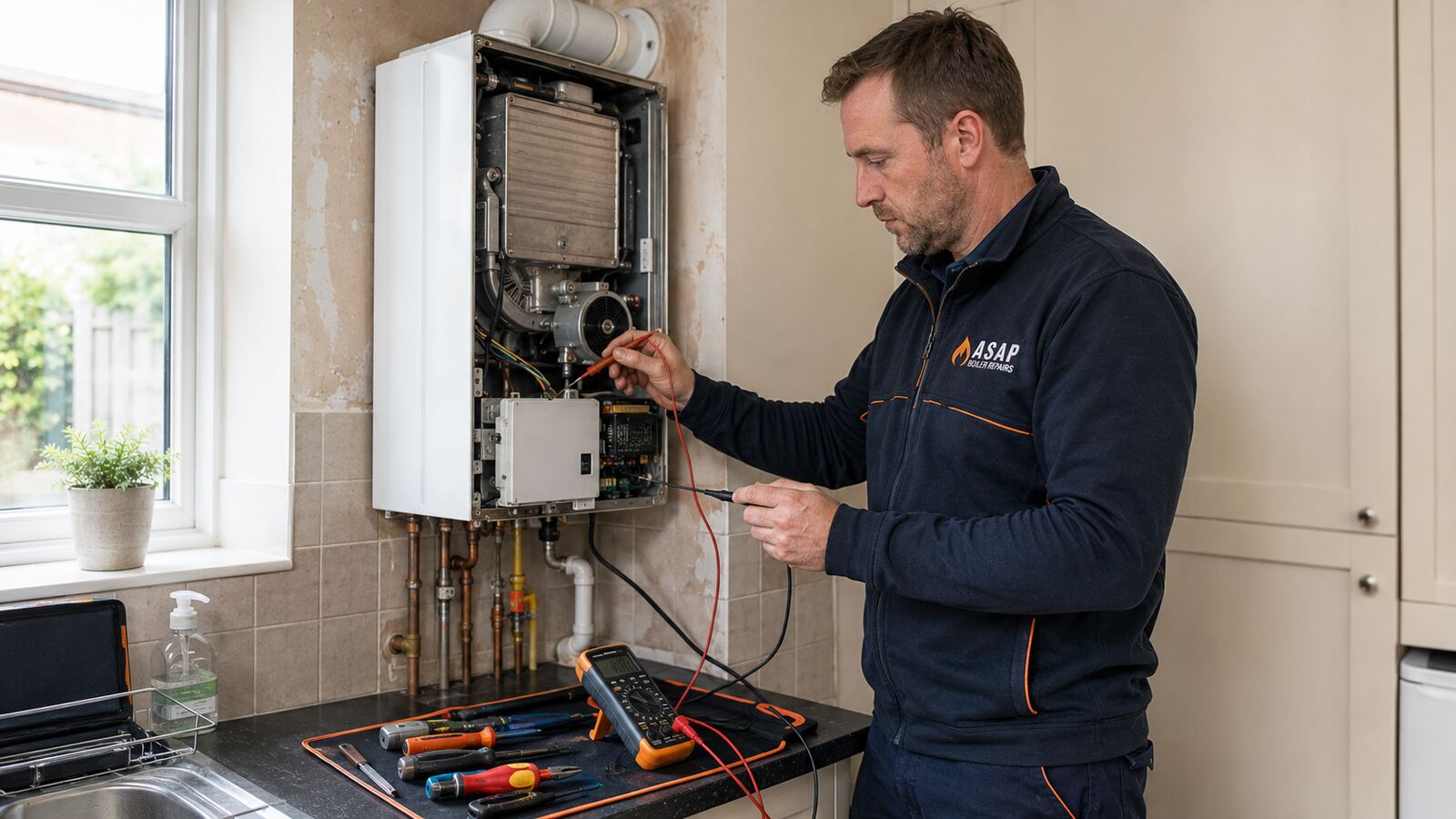
A safety inspection is a narrower job than most landlords expect, and knowing the boundary saves an argument later.
The engineer inspects every gas appliance and flue you are responsible for. On a typical London flat that is the boiler and the hob. On an older house it can be a boiler, a hob, a gas fire and a back boiler, and each one is inspected separately, which is what makes the visit longer than people budget for.
Each appliance is then recorded as passing or as one of the unsafe categories, and if something is unsafe you are told before anything is capped wherever it is safe to do that.
It is not a service. This is the single most common misunderstanding on the subject. A safety check confirms an appliance is safe on the day. It does not clean the heat exchanger, pull the condensate trap, test the inhibitor or adjust combustion, and it does nothing at all for your manufacturer guarantee. If you want the boiler maintained as well as inspected, that is an annual boiler service, a separate job usually booked at the same visit.
It is not a repair. If the check finds a fault, fixing it is separate work with its own agreed rate, and nothing is carried out without you seeing the cost first.
It does not cover electrical safety. The electrical installation report is a different inspection by a different trade on a different cycle.
Getting the timing wrong is the most expensive avoidable mistake on this page, and almost nobody is told about it.
The check is due at intervals of no more than twelve months. The useful part is what happens if you do it early. A check carried out in the two months before the deadline keeps your original expiry date, so you renew on the same anniversary every year and lose nothing.
Do it earlier than that window and the clock resets to the day it was done. Have a certificate expiring in December inspected in July and your next renewal is July, not December. Over a portfolio, doing that repeatedly costs you an extra inspection every few years on every property, for no benefit at all.
If the certificate has already expired, book it and say so. Being late is not something we lecture people about, and the property still needs inspecting either way. If an appliance has been sitting unchecked for two years the visit is more likely to find something, and knowing that in advance means the right parts are on the van rather than a second appointment.

Common, stressful, and the answer is a paper trail rather than a confrontation.
The obligation is on you and the access is not in your gift, which is an uncomfortable position the regulations do recognise. What the law asks is that you take all reasonable steps to carry out the check, and that you can show you did.
What that looks like in practice: written requests rather than phone calls, more than one of them, spaced out, each explaining that this is a legal safety requirement rather than an inspection of the tenant. Keep copies of everything, including the replies you did not get. Offer a choice of dates and offer to work around them. If you use an agent, make sure their correspondence is on the same file as yours.
What you cannot do is force entry. Where access is genuinely being refused over a long period, that has become a question about the tenancy rather than about gas, and it belongs with a housing solicitor. Under the current possession rules that advice is worth getting early rather than late.
Several properties, one visit list, and a plan for the appliance that does not pass.
If you hold more than a handful of properties the useful conversation is about dates rather than jobs. Renewals scattered across a year are harder to track than they need to be, and the two month window is the tool for tidying them without losing time. Tell us the expiry dates and we will tell you which ones can be moved and which should stay where they are.
When an appliance fails, you get told before it is disconnected wherever that is safe. Most failures are not dramatic: a flue seal, ventilation blocked by a later alteration, a fire that has never been serviced. Some are, and where an appliance is immediately dangerous it is made safe on the spot, because that is the engineer's duty and no instruction changes it.
Where a repair is needed the cost comes to you in writing before anything is done, and that is gas boiler repair priced separately from the inspection. If the appliance turns out to be beyond economic repair, our guide to repair and replacement costs sets out what drives the figure and the boiler installation page covers the alternative.

Local boiler repair specialists
Clear advice. Careful repairs. Family-friendly service.
Call 0203 868 6134London, north and south of the river. These are the districts we work in most.
These are where we work most, not a boundary. An engineer attends anywhere in north London and south London. Tell us where you are and we will say plainly when we can get to you.
If you smell gas: do not touch any switches. Open the windows, leave the property, then call the National Gas Emergency Service on 0800 111 999. That line is free and open 24 hours. Call them before you call us.
If a carbon monoxide alarm is sounding: get everyone out immediately, then call 999 if anyone feels unwell. Do not go back in until the property has been ventilated and checked.
If the boiler locks out repeatedly: try one reset. If it locks out again straight away, stop. Repeated resets hide a fault that is still there, and on a gas appliance that is not a risk worth taking.
Under the Gas Safety (Installation and Use) Regulations 1998, only a Gas Safe registered engineer may work on gas appliances. Never open the boiler casing yourself.
Yes. They are two names for the same document. The Gas Safety (Installation and Use) Regulations 1998 call it a landlord gas safety record, and CP12 was a form number from the old CORGI era that stuck in the trade and in search. Anyone who tells you they are different things, or that you need both, is either confused or selling you something twice.
No, and this is the answer most pages still get wrong. Section 21 no fault notices were abolished on 1 May 2026 under the Renters' Rights Act 2025, and the transitional window for notices already served closed on 31 July 2026. Possession now runs through section 8 statutory grounds, and a missing gas record does not by itself bar an order for possession. The obligation and the penalties for breaching it are entirely unchanged, and anything touching an actual possession claim is a question for a housing solicitor rather than for us.
Yes, within a two month window. A check carried out in the two months before the expiry date keeps your original anniversary, so the renewal stays on the same date every year. Done earlier than that, the clock resets to the day of the inspection and you lose the difference permanently. Over a portfolio that is an extra inspection every few years per property for no benefit, which is why we ask for your expiry date rather than just booking you in.
Within 28 days of the check for tenants already living there, and before they move in for new tenants. You also keep copies for two years from the date of each check. Issuing it late is a breach in its own right even where the inspection itself was done on time, and it is the part that most often catches out a landlord who did everything else correctly.
No, and they are commonly booked together which is why they get confused. A safety check confirms the appliances are safe on the day and produces a legal document. It does not clean anything, does not adjust combustion, and does nothing for your manufacturer guarantee. A service is maintenance: the boiler is tested, cleaned and set, and it is what keeps the guarantee alive. If you want both, book them as one visit and say so, and see our boiler service page for what that half involves.
The law asks you to take all reasonable steps and to be able to show that you did. That means written requests rather than phone calls, more than one, spaced out, each explaining that this is a legal safety requirement, with copies kept including of the replies you never got. Offer a choice of dates. You cannot force entry. Where access is refused over a long period it has become a tenancy question rather than a gas question, and that belongs with a housing solicitor. We will attend at a time the tenant chooses, evenings and weekends included.
No. The duty applies to gas appliances and flues, so a property with an electric boiler, an electric hob and no gas supply needs no gas safety record at all. Be careful with the middle case, though: a flat with an electric boiler and a gas hob still needs one, for the hob. If yours runs on electricity throughout, our electric boiler repair page covers what that system does need instead, because electric boilers still have maintenance requirements that affect the guarantee.
London, north and south of the river, across twenty six districts. Hampstead Garden Suburb and Finchley, Esher, Claygate and Thames Ditton, and Sanderstead and Selsdon are three of them. We do not qualify coverage by distance or add conditions to particular postcodes, and we take portfolio bookings across more than one borough on a single visit list. The full list is on our areas we cover page.
A safety check covers any make. Where the inspection turns up a fault, these pages set out the codes and the parts that fail on each.
Every make is listed on the boiler makes we repair. If an appliance fails outside working hours, that is emergency boiler repair. If you would rather write than ring, contact a boiler engineer in London.
Have the property address, the number of gas appliances and the current expiry date ready if you can. With those three we can tell you whether to book now or wait, and how long the visit will take, before anybody is booked in.
Gas Safe registered. Unvented cylinder qualified. Parts guaranteed for a year. Covering London, north and south of the river, 24 hours a day.