Gas Safe registered
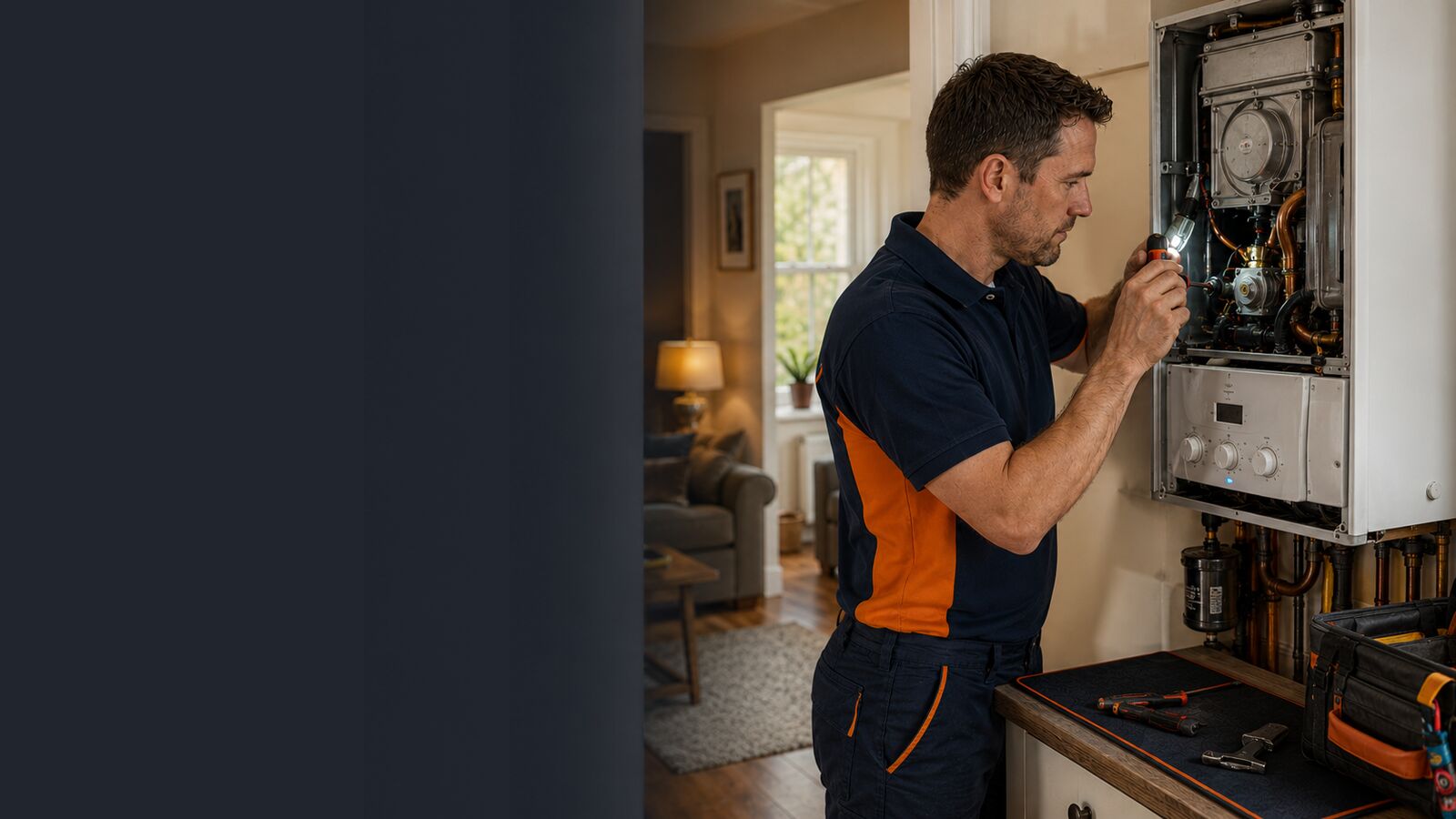
Alpha specialists

E-Tec, E-Tec Plus, InTec and the older CD. Twenty years on Alpha boilers, rates agreed beforehand, and parts guaranteed for a year.
Answered 24 hours a day by a technical customer service member.
E1 and E01 are two different codes on Alpha, not one written two ways. Read out exactly what is on the screen.
No heating or hot water right now? Call 0203 868 6134. We will tell you the earliest realistic slot rather than the one you want to hear.
Two details to start. Add the fault code and your postcode and we can usually tell you the likely part before we attend.
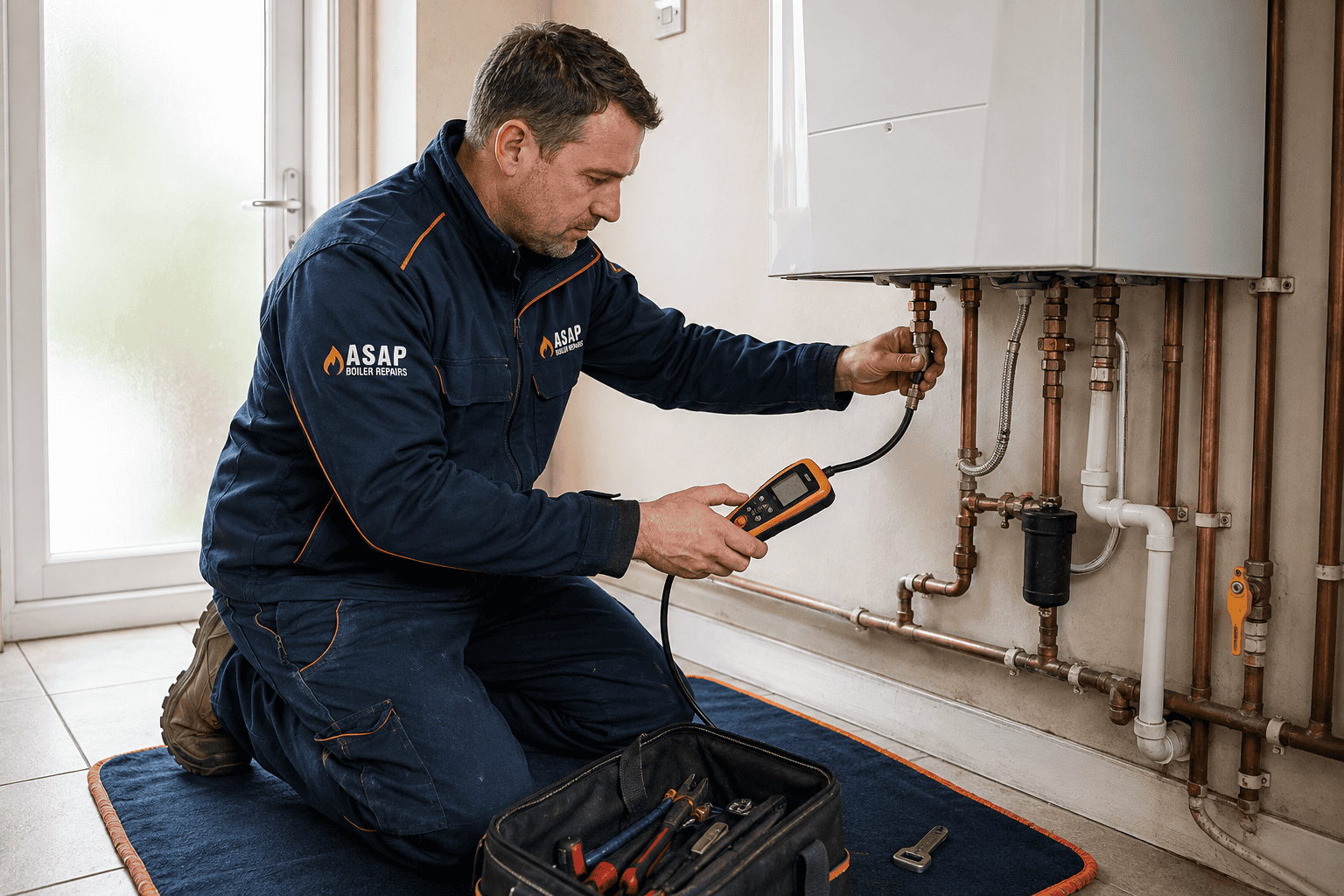
Three steps, no sales pitch, and you will know where you stand before an engineer is booked.
If two people have given you two different answers about the same Alpha code, neither of them was necessarily wrong. This is the make where code meanings genuinely differ between ranges, and where a generic list found online will confidently tell you something that is not true of your boiler. We work from the fault table for your model rather than from a general one, and we will tell you when the code alone is not enough to be sure.
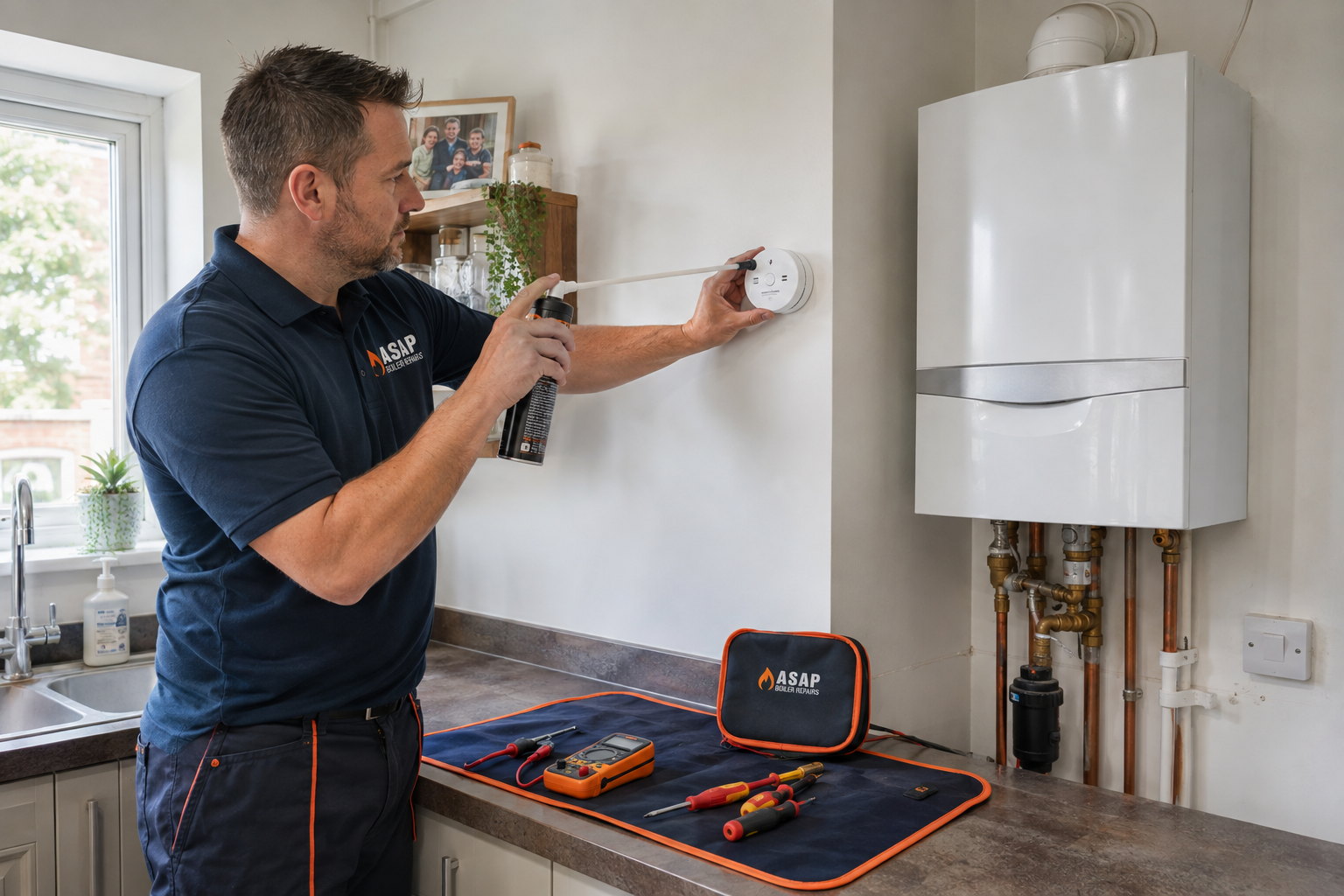
Alpha build compact boilers designed to fit where others will not, and the failure pattern reflects that. Six parts cover most of it.
Alpha is the make where looking a code up online is most likely to give you a wrong answer stated confidently. Meanings differ between ranges, the same fault appears in three different formats, and two codes that look like typing errors for each other are genuinely separate faults.
What the boiler is usually saying: primary system pressure has fallen below the level it needs to run safely. On most of the range this is the most common code and the only one most householders can clear themselves.
The caution that matters: not every Alpha reads E10 the same way, and at least some documentation describes it as an overheat rather than a pressure fault. Before you act, look at the pressure gauge. If it reads normally and E10 is showing, do not assume the boiler is short of water.
What you can safely do if the gauge is low: switch the boiler off, let it cool, then repressurise through the filling loop. Use the target figure in your own manual. Alpha state it by model, and a general answer of 0.5 or 0.6 bar is not accurate for every one of them. The E-Tec Plus NX manual, for example, gives around 1.0 to 1.2 bar cold.
What Alpha themselves list as causes: a system leak, an expansion vessel problem, the pressure relief valve discharging, or the pressure switch itself.
If it keeps dropping: stop topping it up and get it looked at. Every refill draws in fresh oxygenated water, and oxygen plus steel radiators is how magnetite is made, so the pressure loss quietly creates the sludge that a proper system clean then has to remove.
Read us the gauge and the exact model. Both matter on this one.
E01 means ignition failure. The boiler tried to light the burner and could not detect a stable flame, so it locked out.
E1 is a different code. On several Alpha models it points at a thermistor or temperature sensor rather than at ignition. These two get treated as the same thing constantly, including by people who should know better, and they are not.
So the first thing to establish is whether your display shows one character after the E or two. It sounds pedantic. It is the difference between an electrode and a sensor.
What E01 usually is: check the gas supply first, because a hob that will not light points at the supply rather than the boiler. In winter, check the condensate pipe outside for ice and thaw it with warm water, never boiling. Then the electrodes.
One reset, then stop. Alpha boilers count reset attempts and eventually refuse them, which adds a second fault to clear on top of the first.
One digit after the E, or two? That answer changes everything.
On the majority of the Alpha range E20 is a flame detection failure, closely related to E01 and often appearing alongside it.
The difference worth drawing: E01 is generally about failing to establish a flame at all. E20 is about the flame not being detected, which points more firmly at the sensing side than the spark side.
The honest caveat: some sources list E20 as a high pressure fault instead. If your gauge is reading well above 2.5 bar, take that seriously rather than assuming a flame fault. Checking the gauge costs nothing and rules one of them out immediately.
What we do about it: we work from the fault table for your specific model. If the code alone is ambiguous, we say so on the phone rather than arriving with the wrong part.
What is the pressure gauge reading? That settles which of these it is.
E16 points at the fan. E96 covers a fan fault or a blocked flue, and E28 appears on some models as a flue fault.
What is worth checking before the fan is ordered: the flue terminal outside. If it is reachable and visibly blocked by leaves, a nest or building debris, that produces the identical code on a perfectly healthy fan. Do not dismantle anything, just look.
The warning you probably had: a fan bearing gets loud before it fails. An Alpha that has sounded rough for a few weeks was telling you this was coming.
Why these codes deserve respect: the fan and flue carry combustion products safely out of the building. This is not a code to keep resetting past.
Can you see the flue terminal from outside? Worth a look before we come.
A differential water flow switch that has stuck in the open position. It is a small mechanical part and it is the cause of one of the most annoying Alpha symptoms.
What it does when it is working: tells the boiler that water is moving, which is what allows the burner to fire.
What happens when it starts to fail: it works intermittently long before it produces a code. You get hot water that arrives, disappears and comes back, sometimes for weeks, with nothing on the display. By the time E12 shows, the fault has been developing for a while.
Why that matters: if you have had unreliable hot water and then this code appears, they are the same fault rather than two. Tell us about the earlier symptom, because it confirms the diagnosis before anybody opens the boiler.
Has the hot water been unreliable for a while? That is the same fault.
E08, shown as E8 on some displays, means the boiler has exhausted its automatic reset attempts. It is not a new fault.
What it actually means: the boiler has been trying to recover from something else, has used up the attempts it allows itself, and has now stopped. The real problem is whatever it was recovering from.
Why it matters: this code sends people looking for a fault that does not exist, and it hides the one that does. What was showing before this appeared is the code that needs fixing.
What not to do: keep cycling the power to clear it. Every attempt runs the boiler through an ignition or pressure cycle, which wears the ignition components while fixing nothing.
Related: code 44 appears on some models as a safety lockout, which should not be reset at all before somebody has looked at it.
What did the screen say before this? That is the one we need.
Alpha display faults in three different ways depending on the range, and knowing which one you are looking at narrows the model down before anybody has seen the label.
E followed by two digits, such as E10, E01 or E16. The most common format, used across the E-Tec ranges and their relatives.
A bare number with no letter, such as 1, 2, 10, 15, 25 or 44. Alpha's own fault tables list codes this way, so code 10 and E10 are the same fault written differently, and code 1 is E01.
0A followed by digits, such as 0A1, 0A15 or 0A16, which appears on the Pro Tec Plus range. If your display shows this format, a standard Alpha code list will not match your boiler and you need the table for that specific range.
Why this is the single most useful thing on this page: a person searching for Alpha fault code 15 and a person searching for E15 are looking at the same fault, while a person with 0A15 is not. That one distinction accounts for most of the confusion around this brand.
Which format is on your screen? It tells us the range before you find the label.
| Code | What the boiler is saying | What it usually turns out to be |
|---|---|---|
| E1 | Thermistor or temperature sensor, on several models | Not the same as E01. Check which you have |
| E2 | Failed to light or hold a flame | Read alongside E01 above |
| E15 | Gas valve commanded but no response | The valve, its wiring, or the board driving it |
| E25 | Dry fire, or overheat on some models | Circulation. Stop using it and call somebody |
| E28 | Flue fault | An obstruction or a flue installed badly |
| E37 | Pressure or sensor related, varies by model | Check the gauge before assuming anything |
| E75 | Control board, on E-Tec and E-Tec Plus | Worth testing the sensors that feed it first |
| E96 | Fan fault or blocked flue | Look at the flue terminal before ordering a fan |
| Code 44 | Safety lockout | Do not reset. Get it looked at |
The pressure your Alpha needs is stated by model, not by the industry in general. Guides that tell you every boiler locks out below 0.5 or 0.6 bar are wrong about some Alphas, and the correct cold target differs between the E-Tec NX and the E-Tec Plus NX even though the names are almost identical. Before you top up, find the figure in your own manual. Filling to the wrong pressure is one of the few householder actions that can cause a second fault.
Alpha boilers are built compact and go into places other boilers will not, which produces a distinct set of problems that never reach the display.
This is the Alpha symptom we hear about most, and it almost always predates any fault code by a considerable time.
The usual cause is the differential flow switch, the small mechanical part that tells the boiler water is moving so the burner can fire. As it begins to stick it works sometimes and not others, so hot water arrives, vanishes and comes back with nothing on the display.
How to tell it apart from scale: a scaled plate heat exchanger gives you water that is steadily lukewarm and never properly hot. A sticking flow switch gives you water that is properly hot when it works and completely absent when it does not. All or nothing is the switch. Steady and disappointing is the scale.
Why it is worth reporting early: the switch is not an expensive part, and dealing with it while it is intermittent is a shorter visit than dealing with it once the boiler has locked out.
All or nothing, or steadily lukewarm? The answer names the part. Call 0203 868 6134.
Alpha's compact dimensions are the reason a great many of them are in London flats, tucked into a cupboard in a hallway or above a worktop where nothing larger would go.
Why it matters when you book anybody: access is a real factor in how long the job takes and what an engineer needs to bring. A boiler with a shelf above it and units either side is a different proposition from one on an open wall.
What to check yourself: whether the cupboard has ventilation, and whether anything has been stored against the boiler. Coats, towels and cleaning products stacked around an appliance are worth moving before an engineer arrives, and one of those is a genuine safety point rather than a tidiness one.
The flat specific problem: shared flues and shared plant. If your building has a communal system, a fault in your flat may not be yours to fix, and it is worth establishing that before anybody charges you for a diagnosis.
Tell us where it lives when you call. It changes what we bring. Call 0203 868 6134.
You press reset and nothing happens, or a different code appears. The boiler has not developed a new fault, it has stopped accepting attempts.
What is going on: Alpha boilers allow themselves a limited number of automatic recovery attempts. Once those are used, the boiler stops trying and reports that rather than the original problem.
What that means for you: the fault you need fixed is the one that was showing before you started resetting. If you can remember it, write it down. It is worth more to an engineer than the code currently on the screen.
What not to do: switch it off and on at the wall repeatedly. Every cycle runs the boiler through another ignition attempt, which wears the electrodes and hides the original fault further.
It happens on this brand more than any other, and it is worth understanding why rather than assuming somebody was careless.
Alpha have produced a long list of ranges over the years, including E-Tec, E-Tec Plus, E-Tec NX, InTec, InTec2, Evoke, CD, CB, Eco2 and Pro Tec Plus. Code meanings are not consistent across all of them, the display format changes between them, and even the correct system pressure differs between models with nearly identical names.
What that means in practice: a general Alpha code list is a starting point rather than an answer, and an engineer working from one can reach a reasonable but wrong conclusion.
What to ask: which range the diagnosis is based on. A confident answer that names your model and the specific fault table is worth more than a confident answer that names neither.
What we do: ask for the model before we quote, and tell you when a code alone is not enough to be certain. We work on every make of boiler and this is the one where the model matters most.
The right pressure is not the one in the guides
Alpha state the correct cold pressure by model, and it differs between an E-Tec NX and an E-Tec Plus NX despite the names. Filling to a general figure is one of the few things a householder can do that creates a second fault.
The label is behind the front panel. On this make the model name is not a detail, it is half the diagnosis, because the fault tables differ between ranges.
Alpha name the range, then the output, and sometimes add a suffix. An E-Tec Plus 33 is an E-Tec Plus rated 33 kilowatts.
If your boiler feeds a cylinder rather than making hot water on demand, the cylinder is as likely to be the fault as the boiler is, and none of the codes on this page will name it.
E-Tec, E-Tec Plus, E-Tec NX and E-Tec Plus NX are the current and recent ranges, and the ones most often on London walls. E followed by two digits.
InTec, InTec2, Evoke and Eco2 are earlier ranges. Some use the E format and some report bare numbers.
Pro Tec Plus uses the 0A format, which is the one that matches no general code list. If your display shows 0A followed by digits, that identifies your range immediately.
CD and CB are the older ranges, where availability rather than cost tends to decide a repair.
This matters more on Alpha than on any other make on our list. The E-Tec NX and the E-Tec Plus NX are different boilers with different fault tables and different correct pressures, and their names differ by one word.
The serial number and GC number on the label identify exactly which boiler is on your wall, and they are also what gets an engineer to the correct fault table rather than a general one.
Read us the serial from the label when you ring. On this brand it is the difference between a confident answer and a reasonable guess, and it takes ten seconds.
London is a hard water city almost everywhere, and that is the single biggest difference between repairing an Alpha here and repairing one in Manchester or Glasgow.
The supply comes off the Thames and the Lea, both of which run through chalk in the Chilterns and the North Downs. London water measures roughly 277 milligrams of calcium carbonate per litre, and across the city's postcode districts the figure runs from about 250 to over 350. Inside a combi that has one consequence: the plate heat exchanger furs up, and it does it faster than the service intervals in the manual assume.
It is the same story in Putney and Barnes as it is in Croydon. The water is hard, the plate heat exchanger scales, and the only question is whether anybody checks it before condemning the boiler.
Hardness is not uniform, and it does not follow borough boundaries. It varies by supply zone and can change over a short distance, so your supplier publishes a figure for your own postcode and it is worth reading before anybody guesses.
Scale drops out of solution faster the hotter the water gets. A combi set to deliver taps at 65 degrees furs up its plate heat exchanger noticeably faster than one set to 50, which is still hot enough to scald. Turning that dial down costs nothing and is the most effective thing a householder in a hard water area can do. This applies to the tap setting, not to a cylinder, which must reach 60 degrees for safety.
Larger London houses keep stored hot water, and a combi cannot replace it however good the badge is.
Combi-only is the norm among London firms, and in a city full of large period houses that leaves a lot uncovered. A Alpha system or heat only boiler runs a separate cylinder with its own thermostat, immersion element and, if unvented, its own safety devices. So the commonest wrong call-out on this arrangement is the hot water going, the boiler getting blamed, and the boiler turning out to be in perfect health.
The cylinder sensor sits in a pocket on the tank and tells the boiler what the stored water is doing. When it fails, or simply works its way out of that pocket, the boiler stops heating the cylinder while the radiators carry on perfectly, which is exactly why the appliance gets blamed.
The motorised valve decides whether the boiler is heating radiators, the cylinder, or both. A failed motor or microswitch gives you one without the other, and on most installations the head changes without draining the system down.
The immersion element scales and either trips its thermostat or stops heating. Worth testing before anybody condemns a tank, because an element costs a fraction of one. Large houses on stored hot water, of the kind we see across Blackheath and Greenwich, often have a scale reducer fitted at the same visit.
An unvented cylinder is a pressure vessel. It carries an expansion vessel, a pressure reducing valve, an expansion relief valve and a temperature and pressure relief valve, all discharging through a tundish. Water running at the tundish means one of them has failed. Do not leave it and never cap it off.
Unvented work is notifiable and needs a G3 qualification on top of Gas Safe registration. Our engineers hold both, so the boiler and the cylinder are dealt with on one visit rather than two appointments and two charges. That is why unvented cylinder repair sits alongside the boiler work instead of being farmed out.
Swapping stored hot water for a combi to free an airing cupboard is the change people most often ask us to reverse. A combi cannot run two showers at once, whatever the output on the box, because it heats water as it passes rather than storing it. In a house with three bathrooms the honest answer is usually to keep the cylinder and spend the money replacing it if it is old, rather than removing it.
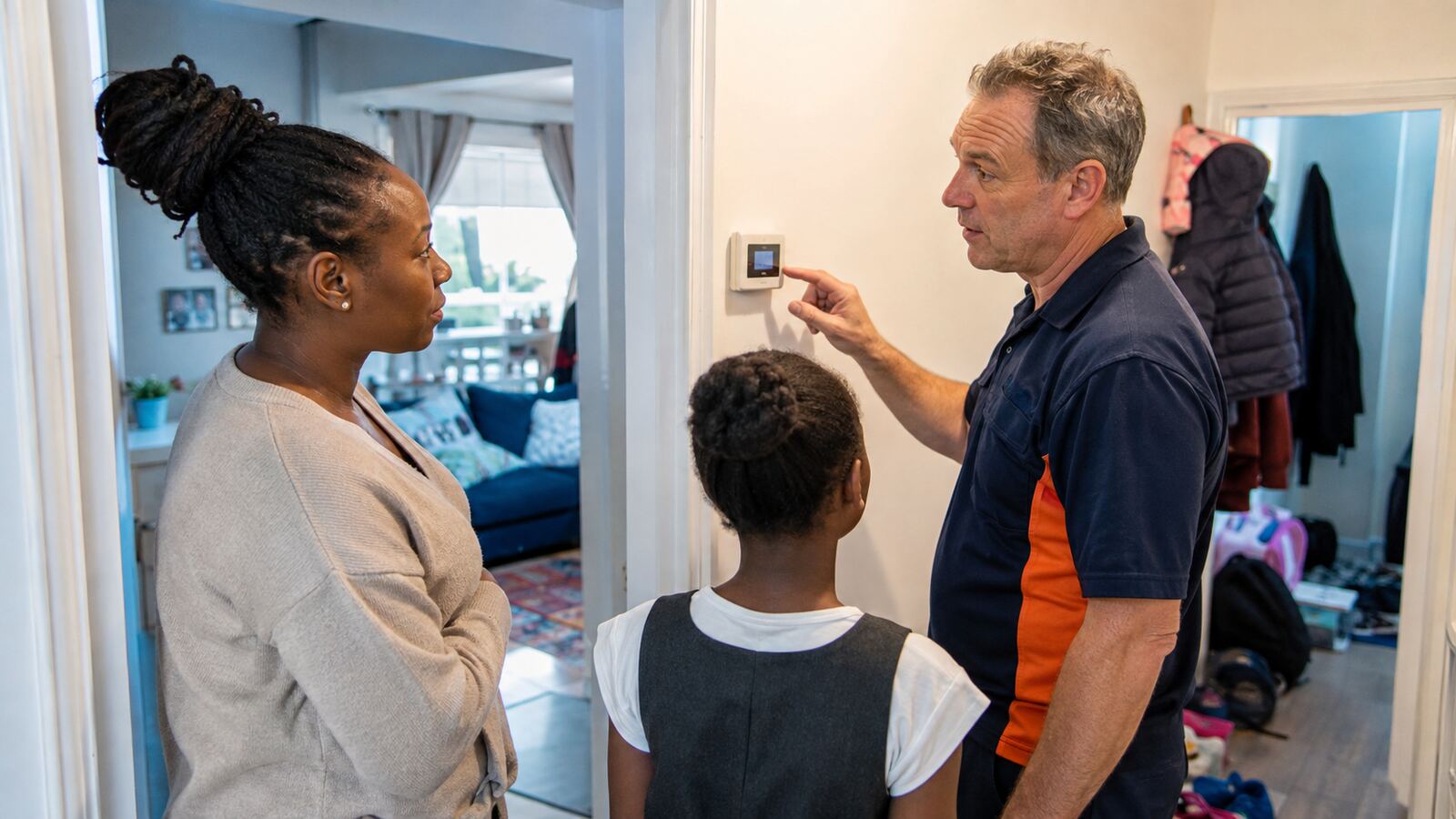
Age is the wrong question. Which part failed is the right one, and we would rather tell you to keep the boiler than quote you for a new one.
| What has failed | Under 8 years | 8 to 14 years | 15 years and older |
|---|---|---|---|
| Pressure sensor or switch | Repair | Repair | Repair if parts exist |
| Ignition and sensing electrodes | Repair | Repair | Repair if parts exist |
| Flow switch, expansion vessel, pump | Repair | Repair | Repair |
| Fan | Repair | Repair | Depends on the rest of the boiler |
| Diverter valve, plate heat exchanger | Repair | Repair | Repair if the part is still made |
| Gas valve | Repair | Depends on the rest of the boiler | Replace |
| Control board | Check the guarantee first | Borderline, we will be straight with you | Replace |
| Main heat exchanger | Guarantee claim if registered | Usually replace | Replace |
At this age the parts are current and the fault is a component, not the appliance giving up. An electrode, flow switch, pressure sensor or fan on a six year old E-Tec is a repair, without qualification.
Ask about guarantee cover when you ring, us included. Alpha registered guarantees run for a set term from installation and are usually conditional on the boiler having been serviced each year, so it is worth finding the paperwork before you spend anything.
Quoted for a replacement at this age? Ask which one part failed, and what that part costs by itself. The gap between those two answers is usually the whole conversation.
Still a clear repair: electrodes, flow switch, pressure sensor, fan, pump, expansion vessel. Ordinary wear items that say nothing about the condition of the rest of the boiler.
The conversation changes with a main heat exchanger or a genuine board failure, or with a second significant failure inside a year. At that point the arithmetic favours replacing the boiler, and the question is what goes in the next two winters as much as what has gone today.
The point worth making on this brand: ask which range the quote is based on. An Alpha misidentified as a different range can be quoted for the wrong part entirely, and that error is more likely here than anywhere else on our list.
Past this point availability takes over from cost. The older Alpha ranges are the ones most likely to stop being repairable, and a CD or CB can be mechanically sound and still finished because one part is no longer made.
The Pro Tec Plus sits awkwardly here too, because its 0A code format means fewer engineers recognise it on sight and diagnosis takes longer.
Before you spend anything on a diagnosis, we will find out whether the part can still be had. That question is free, and on an older Alpha it is the question worth asking first. There is more on what drives the price in our guide to repair and replacement costs.

Local boiler repair specialists
Clear advice. Careful repairs. Family-friendly service.
Call 0203 868 6134London, north and south of the river. These are the districts we work in most.
These are where we work most, not a boundary. An engineer attends anywhere in north London and south London. Tell us where you are and we will say plainly when we can get to you.
If you smell gas: do not touch any switches. Open the windows, leave the property, then call the National Gas Emergency Service on 0800 111 999. That line is free and open 24 hours. Call them before you call us.
If a carbon monoxide alarm is sounding: get everyone out immediately, then call 999 if anyone feels unwell. Do not go back in until the property has been ventilated and checked.
If the boiler locks out repeatedly: try one reset. If it locks out again straight away, stop. Repeated resets hide a fault that is still there, and on a gas appliance that is not a risk worth taking.
Under the Gas Safety (Installation and Use) Regulations 1998, only a Gas Safe registered engineer may work on gas appliances. Never open the boiler casing yourself.
On most Alpha models E10 means primary system pressure is too low, and it is the one code most householders can clear themselves. Check the gauge with the boiler off and cool, then repressurise through the filling loop using the target figure in your own manual, because Alpha state it by model and a general answer of 0.5 or 0.6 bar is not right for every one of them. One caution: not every Alpha reads E10 as a pressure fault, so if the gauge looks normal do not assume the boiler is short of water.
No, and this catches out more people than anything else on this brand. E01 means ignition failure, so the boiler tried to light and could not detect a stable flame. E1 on several Alpha models points at a thermistor or temperature sensor instead. One is an electrode and one is a sensor, and they are not the same repair. Before you look anything up, check whether your display shows one digit after the E or two.
Yes. Alpha display faults in three formats depending on the range: E followed by two digits, a bare number with no letter, and 0A followed by digits on the Pro Tec Plus range. Code 10 and E10 are the same fault written differently, and code 1 is E01. A 0A code is different again and will not match a standard Alpha list. Which format you see identifies your range before you have even found the label.
Because Alpha have produced a long list of ranges, including E-Tec, E-Tec Plus, E-Tec NX, InTec, Evoke, CD and Pro Tec Plus, and code meanings are not consistent across all of them. Even the correct system pressure differs between models with nearly identical names. A general code list is a starting point rather than an answer, so ask which range a diagnosis is based on. A confident answer that names your model is worth more than one that names neither.
Usually the differential flow switch, the small mechanical part that tells the boiler water is moving so the burner can fire. As it begins to stick it works sometimes and not others, so hot water arrives, disappears and returns with nothing on the display, often for weeks before E12 finally appears. All or nothing points at the switch, while water that is steadily lukewarm and never properly hot points at a scaled plate heat exchanger instead.
Nothing new. Alpha boilers allow themselves a limited number of automatic recovery attempts and then stop trying, which shows as E08 or E8 on many models. The fault that needs fixing is whatever was showing before you started resetting, so if you can remember it, write it down. Cycling the power repeatedly runs the boiler through another ignition attempt each time, which wears the electrodes while hiding the original fault.
The label is behind the front panel. Alpha name the range then the output, so an E-Tec Plus 33 is an E-Tec Plus rated 33 kilowatts, and NX marks the more recent generation. Read us the serial when you ring rather than just the name, because the E-Tec NX and the E-Tec Plus NX are different boilers with different fault tables and different correct pressures despite differing by one word. The serial number is what gets an engineer to the right table.
Nobody can quote a repair without knowing what has failed, and a firm figure offered over the phone before a single question is a guess. Three things drive it: which component has gone, whether it is on the van or has to be ordered, and how long the work takes. On an Alpha the exact code and the model together usually tell us which part before anybody attends. The rate is agreed beforehand and parts we fit are guaranteed for a year, so nothing is carried out on the assumption that you will approve it afterwards. There is no charge for telling you a repair is not the right call. There is more on what drives the price in our guide to repair and replacement costs.
Alpha build compact boilers designed to fit where larger appliances will not, which is why so many London flats have one.
No gas supply? Plenty of London flats run without one, and we also cover electric boiler repair.
On an Alpha the correct pressure is model specific, so a general figure can cause a second fault. Give us the exact model and the exact code, including whether there is one digit after the E or two.
Gas Safe registered. Unvented cylinder qualified. Parts guaranteed for a year. Covering London, north and south of the river, 24 hours a day.