Gas Safe registered

SE26 SE23
Gas Safe engineers across SE23 and SE26, 24 hours a day.
Answered 24 hours a day by a technical customer service member.
In a tall narrow house the radiator furthest from the pump is the one that never gets hot, and that is a balancing problem.
No heating or hot water right now? Call 0203 868 6134. We will tell you the earliest realistic slot rather than the one you want to hear.
Two details to start. Add your postcode and whether there is a cylinder in an airing cupboard and we can usually tell you the likely part before we attend.

We cover Sydenham, and the whole of London
Tell us the address and you will get an honest answer about timing.
View areas we coverThree steps. The first one usually tells us most of it.
If a repair is not worth doing, we will say so on the phone. Call 0203 868 6134.
Almost nobody says they live in SE26. They say Upper Sydenham, or Kirkdale, or Perry Vale.
Names we hear on SE23 and SE26 calls, and the postcodes around them
Grouped by postcode, because that is the one part of an address everybody knows.
We work right across London, north and south of the river. If yours is not here, ring and tell us the address.
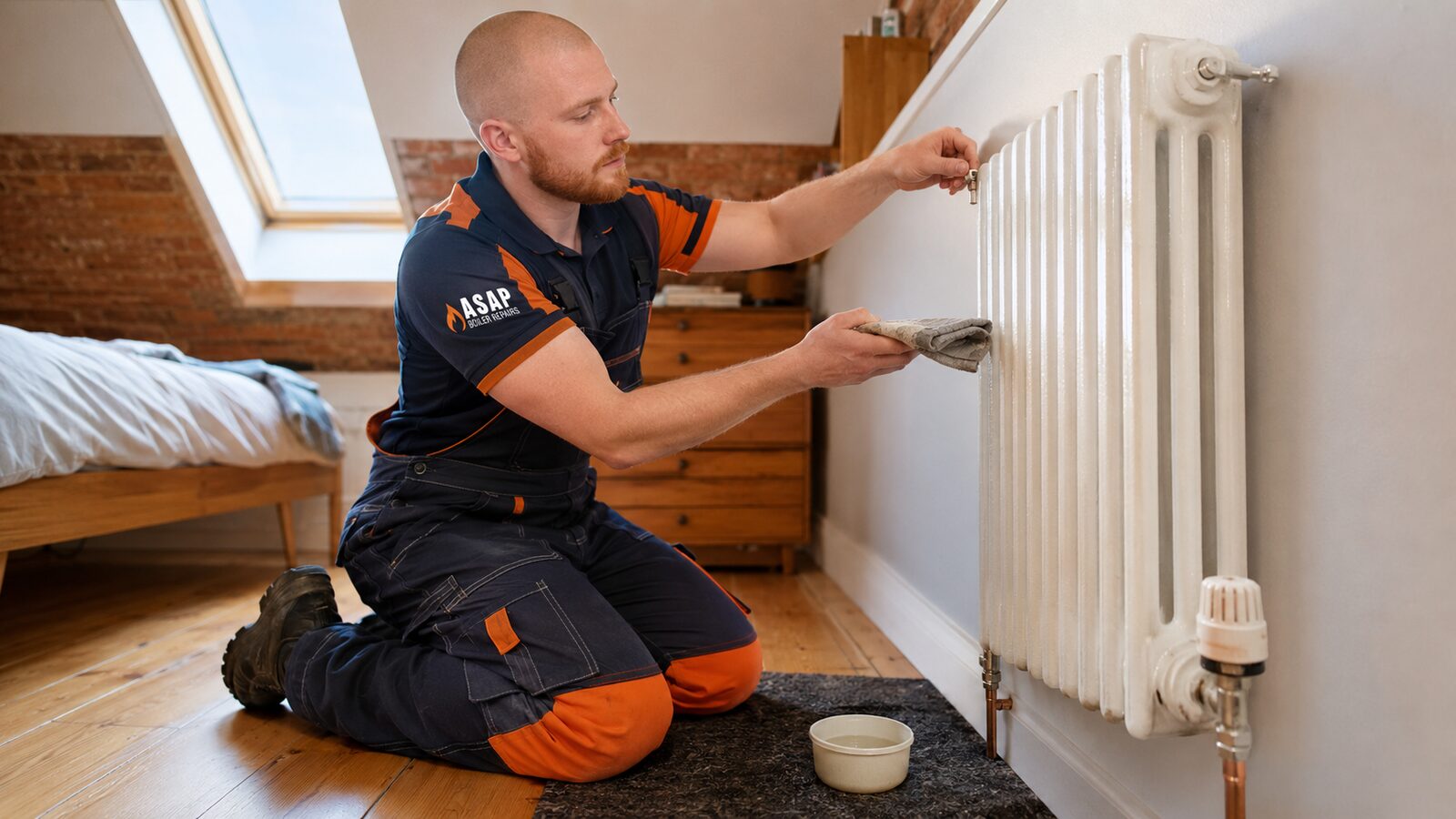
Which is a distribution problem, not a boiler one.
Sydenham and Forest Hill are built up the side of a hill, and the housing is tall Victorian: three and four storeys on narrow plots, many with a lower ground kitchen and bedrooms right up under the roof. That shape produces long pipe runs, and long pipe runs produce a specific and very common complaint.
Water takes the easiest route. The radiators nearest the pump have the least resistance, so they take the most flow, and the one furthest away, the index radiator, takes what is left. In a four storey house that is usually a top floor bedroom, and it is the room that has never been properly warm since anybody can remember.
That is a balancing problem. It is solved with the lockshield valves, the pump setting and sometimes a bypass, not with a bigger appliance. A new boiler on an unbalanced system heats the same rooms and leaves the same one cold, which is why this complaint survives so many replacements.
A radiator that is hot at the top and cold at the bottom is sludge. A radiator that is cold all over while its neighbours are hot is balancing. They look like the same complaint and they are two completely different jobs.
The commonest call from SE26, and it is rarely the boiler.
On a stored system, heating that works and hot water that does not points at the cylinder side. Three usual culprits: the motorised valve that diverts flow to the tank, the cylinder thermostat, and the immersion element. Each costs a fraction of a new appliance and each gets mistaken for one.
In a house this tall the secondary circuit is the other candidate. A pump keeps hot water standing ready at the top so the furthest tap does not wait, and when that pump gives up the top floor runs cold while the lower ground kitchen stays perfect.
An unvented cylinder is a pressurised store, so working on one is notifiable and needs a G3 qualification on top of Gas Safe registration. Plenty of firms hold one and not the other, which is why a cylinder call so often becomes two visits. Our engineers hold both, so it is one visit and one charge. See unvented cylinder repair.
And to the far end of a long circuit first.
London water comes off the Thames and the Lea, both of which run through chalk. It measures roughly 277 milligrams of calcium carbonate per litre, and that figure is much the same across the city.
Where it lands is what differs. In a combi it furs the plate heat exchanger. In a tall Sydenham house it does something else too: scale and magnetite settle where flow is slowest, which is the far end of a long circuit. So the index radiator that was already the weakest is the first to silt up, and the complaint gets steadily worse rather than staying still.
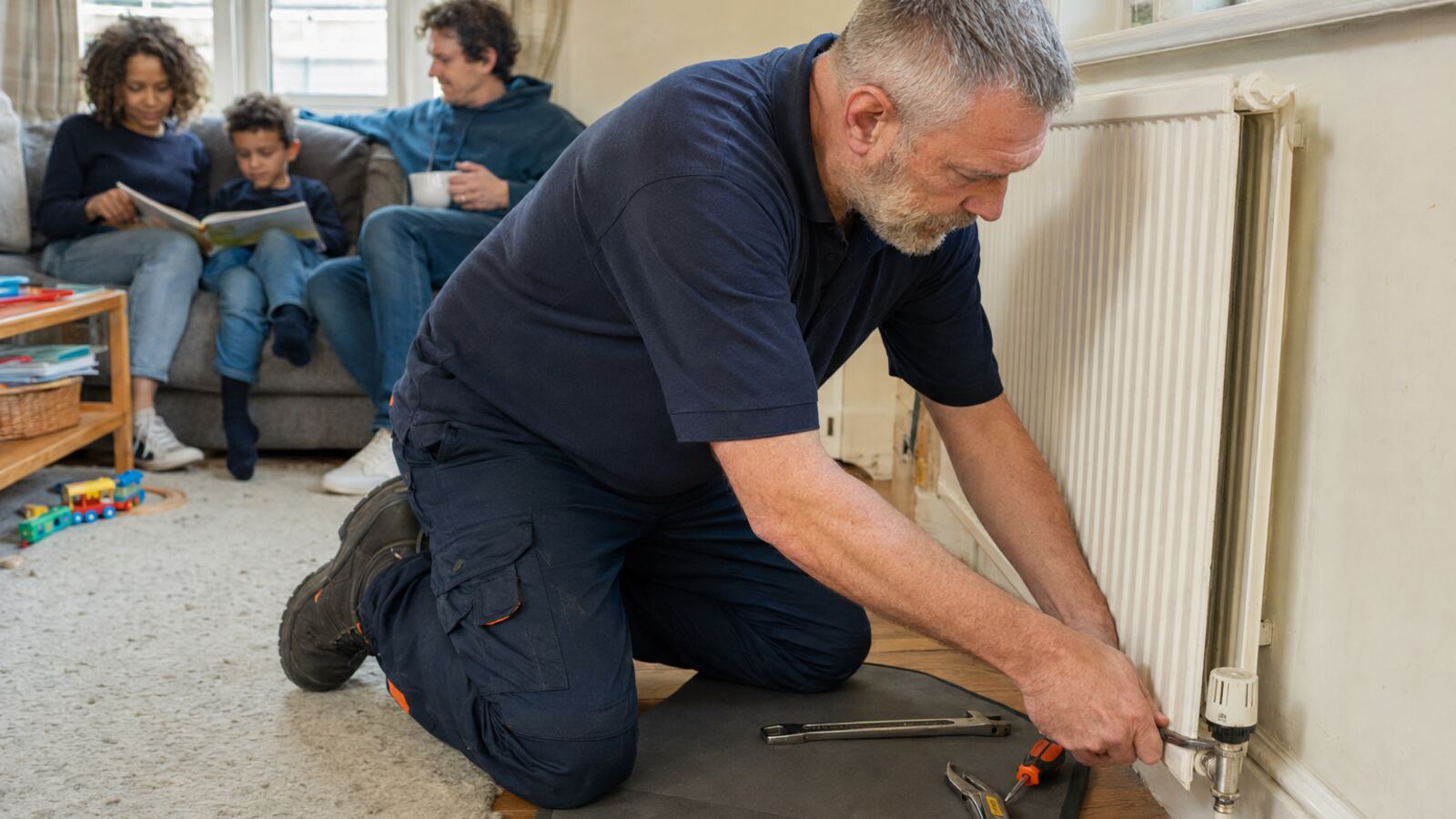
Age does not decide it. The failed part does.
A pump, a diverter valve, a thermostat or a fan is a repair on almost any appliance, whatever its age. A failed main heat exchanger on a boiler well past ten years is the point where the arithmetic stops working, and we will tell you that rather than sell you the repair.
If one room has never been warm, a replacement will not change it. Balancing, the pump setting and the state of the far end of the circuit decide what that room gets, and none of those improves because the appliance is new. Getting the system right first is cheaper and it is the only way to know whether the boiler was ever the problem.
Our boiler replacement page sets out what a replacement actually involves, including what changes when a stored system is converted, and the costs guide explains what moves the figure.
That answer costs nothing. It is the one most people ring us for. Call 0203 868 6134.
Next door to here we cover Blackheath and Greenwich and Dulwich. Everything else is on boiler repair in south London and areas we cover.
These are where we work most, not a boundary. An engineer attends anywhere in north London and south London. Tell us where you are and we will say plainly when we can get to you.
One radiator that has never worked?
In a four storey house that is almost always the index radiator, starved by the ones nearer the pump. Rebalancing fixes it, and it is not a boiler job.
If you smell gas: do not touch any switches. Open the windows, leave the property, then call the National Gas Emergency Service on 0800 111 999. That line is free and open 24 hours. Call them before you call us.
If a carbon monoxide alarm is sounding: get everyone out immediately, then call 999 if anyone feels unwell. Do not go back in until the property has been ventilated and checked.
If the boiler locks out repeatedly: try one reset. If it locks out again straight away, stop. Repeated resets hide a fault that is still there, and on a gas appliance that is not a risk worth taking.
Under the Gas Safety (Installation and Use) Regulations 1998, only a Gas Safe registered engineer may work on gas appliances. Never open the boiler casing yourself.
Yes. The names listed above are the ones we hear most, and they are nowhere near a complete list. We work right across London, north and south of the river. Ring and tell us the address and you will get a straight answer about timing.
Usually not. In a tall house the radiator furthest from the pump takes whatever flow the others leave it, and that is almost always a top floor room. It is a balancing problem, solved with the lockshield valves and the pump setting. A bigger appliance heats the same rooms and leaves the same one cold.
Cold at the bottom with a hot top is sludge settled inside it, and that is a flushing job. Cold all over while its neighbours are hot is balancing, and that is a valve and pump job. They sound like the same complaint and they are two different repairs.
Almost certainly not. That points at the cylinder side: the motorised valve that diverts to the tank, the cylinder thermostat, or the immersion element. All three cost a fraction of an appliance. Our unvented cylinder repair page explains what is involved.
Only if the cause is sludge. A power flush clears what has settled in the system, but if the room was cold from the day it was plumbed the problem is distribution rather than debris, and flushing changes nothing. It is worth establishing which before spending on either.
Yes, and every other major make, including the ones most firms will not touch. Those two are what we open most in SE23 and SE26. Glow-worm and Potterton are common on the older installations, and Alpha, Main and Ariston turn up in the flats. If your boiler is showing a fault code, the brand pages explain what it means.
Yes, and on the same visit where the appliance passes, so a let property is not off the market twice. See landlord gas safety certificates. If it has no gas supply we cover electric boilers as well.
The line is answered 24 hours a day by a technical customer service member, not a call centre reading from a script. In the middle of the night we will tell you honestly whether it is a tonight job or a first thing in the morning job.
Every major make, and the fault code pages often name the part before you ring.
The whole houses that kept a cylinder run system boilers, and here that is mostly Worcester Bosch, Vaillant and Glow-worm, with Potterton still on older installations. The conversions run combis, where Ideal and Viessmann are common.
We also work on the makes most firms will not. Alpha, Main and Ariston all turn up in the flats and smaller conversions, and parts for every one of them are still obtainable.
If your boiler is showing a code, the make decides what it means. A Vaillant F75 and a Glow-worm F1 are different faults with different fixes, and neither of them on its own means a new boiler. Each brand page lists the codes for that make and what actually causes them.
The full list is on our boiler brands page, and general repairs are on boiler repair in London.
Tell us where you are and whether there is a cylinder in an airing cupboard. With those two answers we can usually name the likely part, give you the rate, and book somebody in, all on the one call.
Gas Safe registered. Unvented cylinder qualified. Parts guaranteed for a year. Covering London, north and south of the river, 24 hours a day.