Gas Safe registered
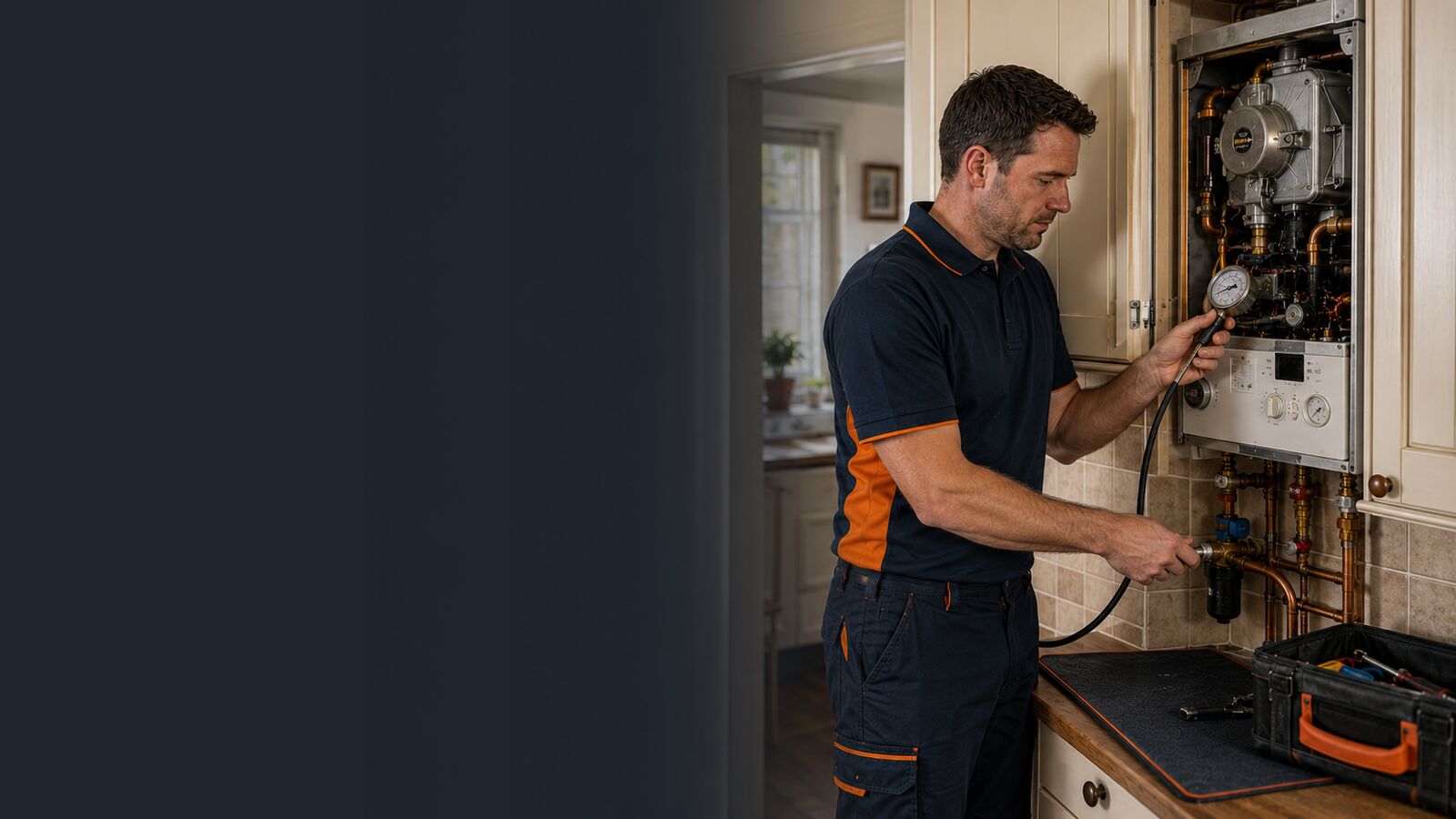
Ideal specialists

Logic, Vogue, Max and the older Icos. Twenty years on Ideal boilers, rates agreed beforehand, parts guaranteed for a year.
Answered 24 hours a day by a technical customer service member.
Note the code first. An Ideal counts resets and replaces it at five.
No heating or hot water right now? Call 0203 868 6134. We will tell you the earliest realistic slot rather than the one you want to hear.
Two details to start. Add the fault code and your postcode and we can usually tell you the likely part before we attend.
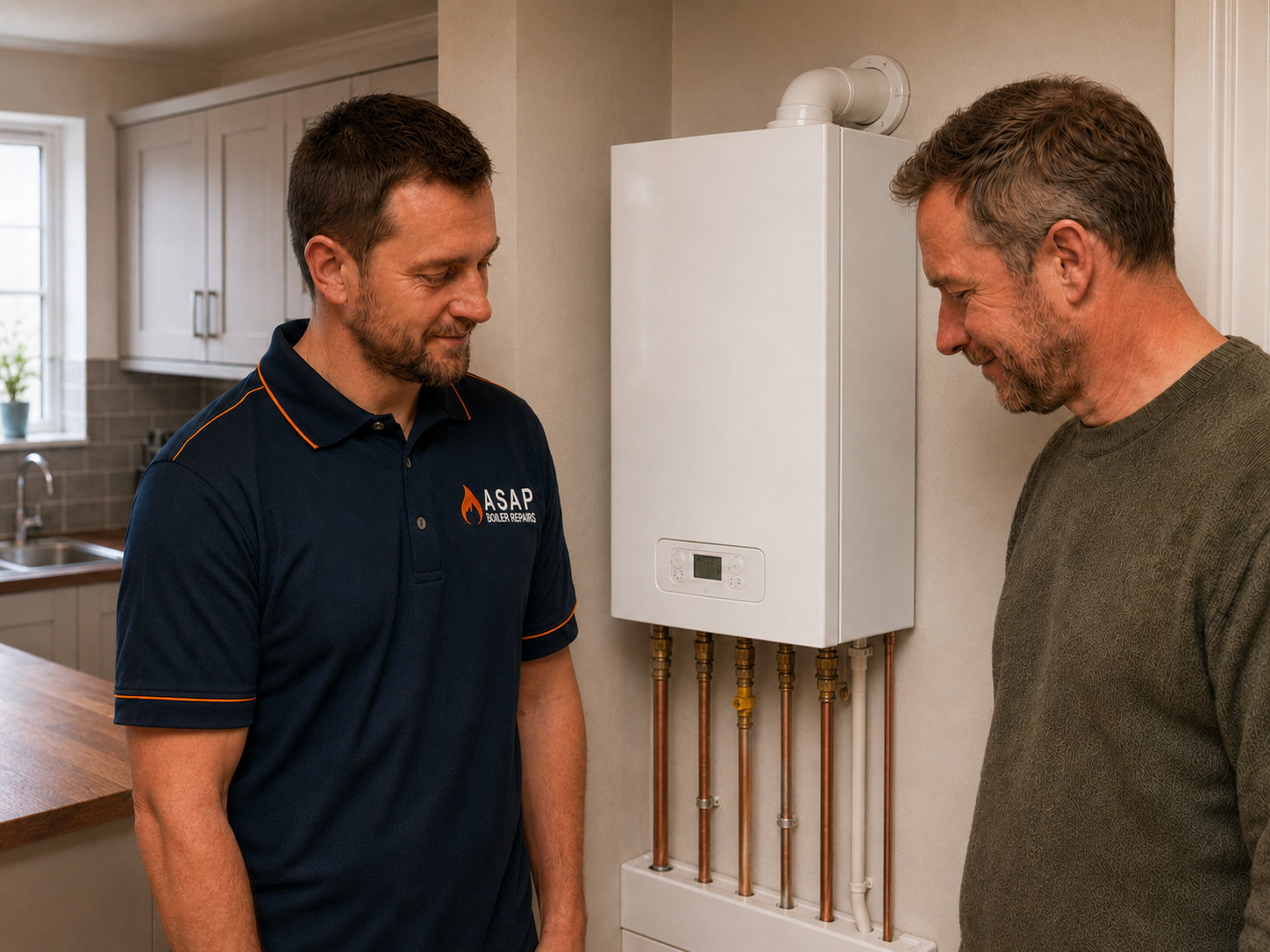
Three steps, and you will know where you stand before anyone is booked.
Your boiler is counting your resets, and most people find that out too late. Five attempts inside a quarter of an hour and an Ideal locks out on its own account, hiding the original fault behind a second one. Tell us what it said the first time. We are the London firm that tells you whether it is the boiler or the cylinder before anyone attends.
An F number is a fault the boiler found. An L number is a lockout: it has stopped and will not restart alone.
It tried to light, never confirmed a flame and shut the gas off. Try a hob first, and in winter thaw the condensate pipe. Otherwise it is the electrodes, then the gas valve.
F2 is not the same fault. L2 never lit; F2 lit and lost the flame, pointing at the sensing electrode or gas pressure sagging under load. Measure pressure at the appliance before ordering anything, because replacing an ignition electrode on an F2 changes a part that was never at fault.
The only Ideal code most householders can clear themselves. Fill to between 1 and 1.5 bar cold, close both valves, reset once. If the gauge already reads 1.2 bar and F1 persists, the sensor has failed rather than the pressure. Do not keep topping up: every refill draws oxygenated water into a sealed system, which is how sludge forms.
L5, or LC on some models, is not a boiler fault. Reset has been pressed five times inside about fifteen minutes and the boiler has stopped accepting it, because each attempt opens the gas valve. The trouble is that it replaces the original code. Switch off at the spur, wait, switch back on, then note whatever returns.
Logic and Logic Max show a letter and a number. Vogue writes it out in words, matching no code list anywhere. Icos flashes letters. Read us the words or the pattern, which identifies the fault as precisely as a code.
| Code | What it means | What it usually turns out to be |
|---|---|---|
| F3 | Fan fault | The fan, its plug, or a restricted flue |
| F7 | Low mains voltage | Your electricity supply, not the boiler |
| F9 | Internal fault | The control board, once everything else clears |
| L1 | Circulation fault | Pump, closed valve, air or sludge |
| LF | Gas valve | Safety critical. Engineer rather than reset |
L6 is not a fault. Frost protection has activated, so the boiler sensed the temperature falling far enough to risk freezing and fired briefly to protect itself. People see an unfamiliar L code on a cold morning and book an emergency visit to be told it is working as designed. If the house is cold and it shows L6, leave it.
Two account for most calls.
Hot water never properly hot, heating faultless. The plate heat exchanger is scaling. The heating circuit is sealed so it scales once and stops; the hot water side takes fresh mains water at every tap. A diverter fault gives none at all, which is how you tell them apart. An annual service catches it while it is still a flush.
Three faults in one winter, around year eight. Ideal went into an enormous number of London new builds, and every wear part went in on the same day. The first is a repair; by the third the question is what has not failed.
Your boiler is counting your resets
Five inside about fifteen minutes and an Ideal stops accepting them, putting its own lockout over the real fault. Whatever showed first is the code we need.
The label is behind the front panel. The range decides how faults are shown.
A Logic Combi 30 is a Logic rated 30 kilowatts. Combi means no cylinder. System and Heat both mean there is one, as likely to be at fault as the boiler. Max and Plus are later revisions, not different boilers. Read us the serial when you ring; it matches your appliance to the right parts.
The biggest difference between repairing one here and one in Manchester.
Water here carries roughly 277 milligrams of calcium carbonate per litre, from chalk the Thames and the Lea run through, so the plate heat exchanger scales faster than the manual allows, the same in Chiswick and Bedford Park as in Balham and Wandsworth Common.
Scale drops out of solution faster the hotter the water gets. A combi set to deliver taps at 65 degrees furs up its plate heat exchanger noticeably faster than one set to 50, which is still hot enough to scald, and turning that dial down costs nothing. It applies to the tap setting, not a cylinder, which must reach 60 degrees.
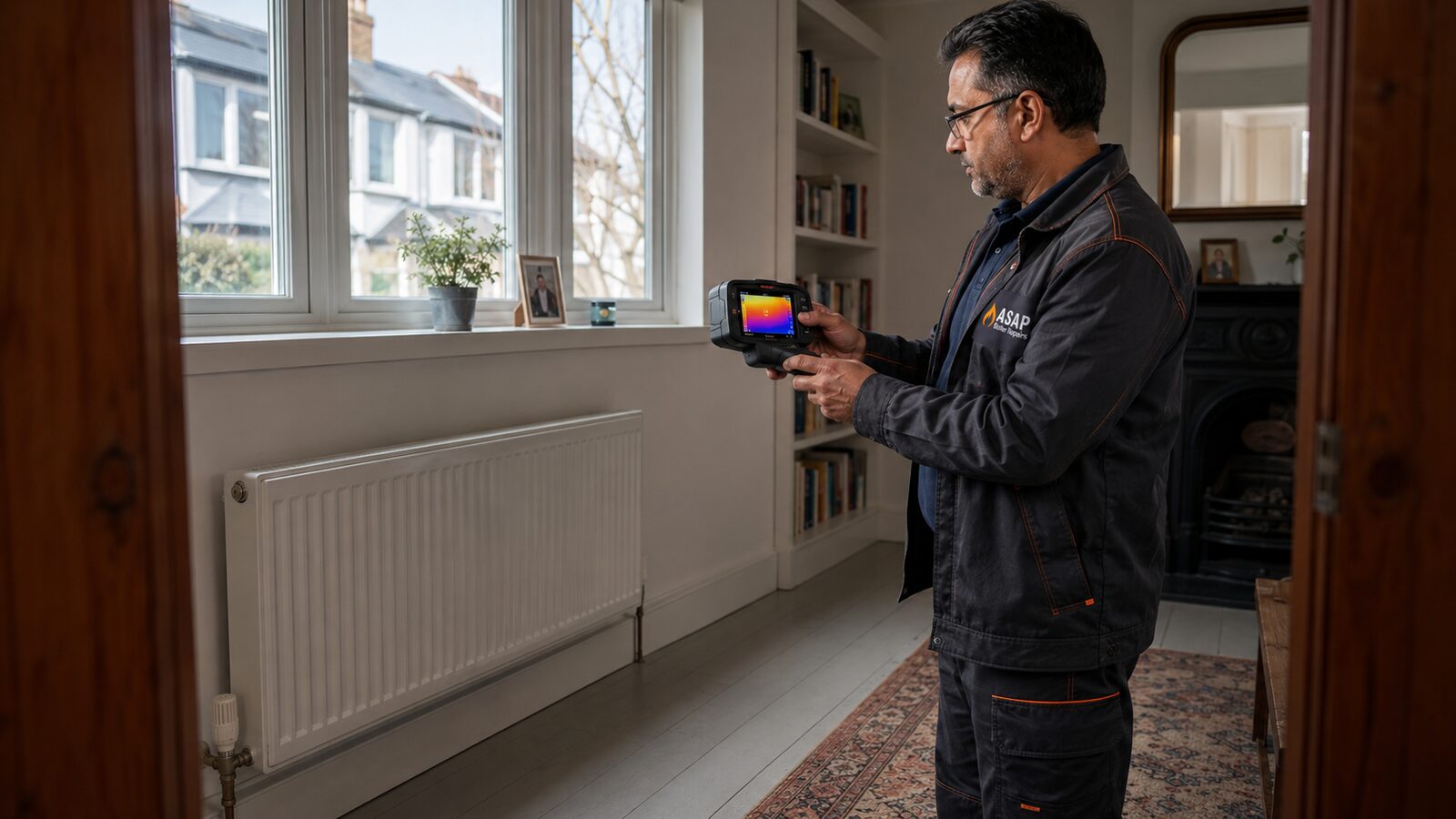
Age does not decide it. The failed part does, and we would sooner keep a boiler running than sell you one.
| What has failed | Under 8 years | 8 to 14 years | 15 years and older |
|---|---|---|---|
| Thermistors, pressure sensor | Repair | Repair | Repair if parts exist |
| Ignition and sensing electrodes | Repair | Repair | Repair if parts exist |
| Expansion vessel, pump | Repair | Repair | Repair |
| Fan | Repair | Repair | Depends on the rest of the boiler |
| Diverter valve, plate heat exchanger | Repair | Repair | Repair if the part is still made |
| Gas valve | Repair | Borderline, we will be straight with you | Replace |
| Control board | Check the guarantee first | Borderline, we will be straight with you | Replace |
| Main heat exchanger | Guarantee claim if registered | Usually replace | Replace |
Under eight years old it is a repair without argument, and guarantee cover is worth knowing because in a new build the paperwork is often still in a developer's folder. Between eight and fourteen only a board or heat exchanger changes it. Past fifteen availability decides. See boiler replacement and our cost guide.
Most firms here are combi-only, which does not suit a city of large houses.
An Ideal System or Heat boiler runs a stored cylinder with its own thermostat, immersion element and, if unvented, its own safety devices. When the hot water goes the boiler takes the blame and is usually fine: a cylinder sensor out of its pocket, a failed motorised valve, or a scaled immersion element. None shows a boiler code.
Water at its tundish means a safety device has failed, and is never something to cap. That needs G3 as well as Gas Safe registration; we hold both, so unvented cylinder repair happens on the same visit, and larger houses across Coulsdon usually get a scale reducer with it.

Boiler problem? We're here 24/7
Emergency boiler repairs across London, north and south of the river
Call 0203 868 6134London, north and south of the river.
These are where we work most, not a boundary. An engineer attends anywhere in north London and south London. Tell us where you are and we will say plainly when we can get to you.
If you smell gas: do not touch any switches. Open the windows, leave the property, then call the National Gas Emergency Service on 0800 111 999. That line is free and open 24 hours. Call them before you call us.
If a carbon monoxide alarm is sounding: get everyone out immediately, then call 999 if anyone feels unwell. Do not go back in until the property has been ventilated and checked.
If the boiler locks out repeatedly: try one reset. If it locks out again straight away, stop. Repeated resets hide a fault that is still there, and on a gas appliance that is not a risk worth taking.
Under the Gas Safety (Installation and Use) Regulations 1998, only a Gas Safe registered engineer may work on gas appliances. Never open the boiler casing yourself.
Because it counts them. Five inside about fifteen minutes and it shows L5, or LC on some models, and refuses more. Each reset opens the gas valve, so the counter is a safety device. The trouble is that it replaces the original code. Switch off at the spur, wait, switch back on, then note whatever returns. No heat meanwhile? See emergency boiler repair.
An ignition lockout: it tried to light, never confirmed a flame and shut the gas off. Try a hob first, because no gas anywhere is not a boiler fault, and in cold weather thaw the condensate pipe. Otherwise it is the electrodes, which an annual service catches before they lock it out, or the gas valve.
Usually, yes. Pressure has dropped below the minimum needed to fire safely. Fill to between 1 and 1.5 bar cold, close both valves, reset once. What you cannot fix is why it fell: once a year is normal, every few weeks means a leak. Avoid topping up repeatedly, because each refill brings oxygenated water into a sealed system and that is how sludge builds up.
You have a Vogue, which writes the fault out instead of showing a code, while Logic shows a letter and a number and Icos flashes letters. Read us the exact words or the flashing pattern, which identifies it as precisely as a code. We work on every make of boiler.
No honest figure exists until somebody knows which part has gone. Three things decide it: the component, whether we carry it or order it, and time on site. On an Ideal the code usually tells us which part before anybody attends. Our guide to repair and replacement costs sets out what drives the figure.
Yes, a large part of what we do. A System or Heat boiler runs a stored cylinder with its own thermostat, immersion element and, if unvented, its own safety devices. Unvented work needs G3 as well as Gas Safe registration and we hold both, so the cylinder is diagnosed on the same visit. A failed cylinder sensor shows no boiler code. See unvented cylinder repair.
Few other makes count your resets, worth knowing before any other fault list.
No gas supply? Plenty of London flats run without one, so we also cover electric boiler repair.
Tell us what the display said first, before any resetting, and the model from the label. With those two we can usually name the part before anyone is on the way.
Gas Safe registered. Unvented cylinder qualified. Parts guaranteed for a year. Covering London, north and south of the river, 24 hours a day.