
Gas Safe registered
ATAG specialists
iC, iC Economiser, iS and iR. Twenty years on ATAG boilers, rates agreed beforehand, and parts guaranteed for a year.
Answered 24 hours a day by a technical customer service member.
Look at the symbol beside the number. A spanner is temporary, a bell means the boiler has locked out.
No heating or hot water right now? Call 0203 868 6134. We will tell you the earliest realistic slot rather than the one you want to hear.
Two details to start. Add the fault code and your postcode and we can usually tell you the likely part before we attend.

Three steps, no sales pitch, and you will know where you stand before an engineer is booked.
Three of the numbers an ATAG can show you are not faults at all. 105 is the venting programme running after the power has been interrupted, and it takes about seven minutes. 180 and 181 appear for a moment when an engineer leaves the chimney sweep or commissioning modes. Every winter people pay for call-outs over those three, and we will tell you on the phone rather than on the doorstep.

ATAG name their sensors rather than numbering them vaguely, which makes the failure pattern unusually easy to read. Six parts cover most of what we attend.
ATAG put a small pictogram beside the code and it changes what the number means. A spanner is a blocking message the boiler may clear by itself. A bell is a lockout. Read the symbol first, then the number.
What the boiler is saying: pressure has fallen below 1 bar, or it cannot detect the pump raising pressure at all. One code, two very different problems.
How to tell which: read the gauge. ATAG's own target is around 1.0 to 1.2 bar cold, which is lower than the figure most general guides quote. If the gauge sits in that range and 118 is still showing, this is not a pressure problem, it is the pump or the sensor.
If the gauge is genuinely low: find the filling loop and top up to about 1.0 to 1.2 bar cold, then reset once. On iC and iC Economiser Plus models the loop is a copper U shaped tube with a nut at each end, on the underside of the boiler, rather than the braided hose people expect.
The related code: 78 means the water pressure sensor is out of range or not connected, which is the sensor rather than the water.
If it keeps dropping: stop topping up and get it looked at. Every refill draws in fresh oxygenated water, which is how sludge forms.
What does the gauge read cold? That number splits this in two.
The number is specific and it matters. The boiler tried five separate times to establish a flame before giving up, so this is not a single unlucky attempt.
Check the gas first. Try a hob. If nothing gas powered in the property will light, top up a prepayment meter or call your supplier, because no gas anywhere is not a boiler fault.
In winter, the condensate pipe. The white plastic pipe leaving the wall freezes and the boiler cannot discharge. Pour warm water along it, never boiling, which splits it. Lagging it afterwards stops it recurring.
What it usually is otherwise: the ignition electrodes, then the gas valve, then a flue problem.
What it almost never is: the control unit. Locking out after five attempts is the safety system working exactly as designed rather than a failure of it.
Does the hob light? Ten seconds, and it changes the answer entirely.
110 is safety temperature exceeded. The safety limit has been passed and the boiler has stopped to protect itself.
111 is maximum temperature exceeded. The working maximum has been passed, which is a step short of the safety limit.
Why the distinction is useful: 111 tends to arrive first, as a warning that the system cannot carry heat away fast enough. 110 is what it becomes if nothing changes. Seeing 111 and acting on it usually costs less than waiting for 110.
What either one usually is: circulation rather than the burner. A jammed pump, a seized valve, sludge or trapped air.
The one that points at pipework: 154 means the flow rose too quickly, the temperature difference across the boiler was too large, or the return was hotter than the flow. That last one usually means the pipework has been connected the wrong way round, so it turns up after somebody has worked on the system.
What helps most: not a part. Getting the system properly clean deals with the cause where a component swap usually does not.
110 or 111? And has anybody worked on the pipework lately?
129 means the fan does not start up at all. It has been asked to run and nothing happened.
151 means the fan starts but cannot hold the speed asked of it, or that the control unit itself is at fault.
Why that matters to you: 129 is usually the fan, its wiring or the plug at the fan. 151 is a broader question, because the same code covers a control unit problem, so testing decides it rather than assuming.
Worth ruling out before either: the flue. A terminal packed with leaves or nesting material makes a healthy fan work against resistance the board reads as a fault, and looking costs nothing where a fan does not.
Why fan codes deserve respect: the fan and flue carry combustion products safely out of the building. This is not a code to keep resetting past.
Can you hear the fan trying at all when it fires up?
61 means a communication contact is open, so the boiler is not receiving a signal from the control it expects to hear from.
What that usually means: the ATAG One or another connected control has lost its link, its wiring has come loose, or it has lost power. The boiler itself is generally in perfect health and simply is not being asked to do anything.
The related one: 119 means a link on the X2 connector at positions 4 and 5 is missing. That is a wiring link rather than a component, and it shows up after somebody has been working on the controls.
What to check before booking anybody: whether the controller has power and a display, whether anything was changed or redecorated near the wiring, and whether the boiler will fire if you override the control.
Why it is worth ruling out first: a control fault and a boiler fault look identical from the living room, and only one of them involves opening the appliance.
Does the controller still have a display? That answer narrows it a long way.
ATAG display several numbers that look exactly like fault codes and are nothing of the kind. These generate real call-outs every winter.
105 is the venting programme. It runs when the power is turned on or has been interrupted, and it takes roughly seven minutes. If your boiler is showing 105 after a power cut, a tripped breaker or somebody switching it off at the spur, wait it out.
180 appears briefly when leaving the chimney sweep function, which is a mode an engineer uses during a service.
181 appears briefly when leaving commissioning mode.
What connects the last two: if an engineer has just been and you see 180 or 181 on the display as they drive away, that is them, not a new fault.
The rule of thumb: a number with no spanner and no bell beside it is telling you what the boiler is doing rather than what is wrong with it.
Did the power go off recently, or has somebody just serviced it?
This is the thing to read before the number, and it is missing from almost every general code list.
A spanner symbol means a blocking message. The error is temporary. The boiler may clear it by itself once conditions improve, or it may lock out after several attempts if it does not.
A bell symbol means an error. The boiler has locked out and can only be brought back by a reset, and often by an engineer dealing with whatever caused it.
The part people miss: a spanner is a bell in waiting. It is the boiler telling you something is wrong while it is still working, and giving you the chance to sort it before it stops. Very few makes do that.
What to do with it: if you see a spanner and you still have heating, that is a call worth making today rather than on the coldest night of the year. Read us the symbol and the number together.
Spanner or bell? That decides how we treat it.
| Code | What the boiler is saying | What it usually turns out to be |
|---|---|---|
| 10 | Outside sensor error | The weather compensation sensor outdoors, or its cable |
| 20 | Flow sensor error | The sensor or its harness, not the heat exchanger |
| 40 | Return sensor error | The sensor or its harness |
| 50 | T3 hot water sensor error | The sensor, behind wandering hot water |
| 78 | Water pressure sensor out of range or not connected | The sensor, when the gauge itself reads normal |
| 117 | Pressure above 3 bar, or pump pressure rise too high | A filling loop left open, usually |
| 119 | Link missing on X2 positions 4 and 5 | Wiring, after somebody worked on the controls |
| 154 | Flow rising too fast, or return hotter than flow | Pipework connected the wrong way round, or circulation |
| 151 | Fan speed not achieved, or control unit fault | Test before ordering. The code covers both |
Your ATAG has a diagnostic menu you can read yourself. Hold the Eco button for about six seconds, then tap the plus button to scroll through the A menu. A6 shows the system water pressure digitally, which is useful when the analogue gauge under the boiler is hard to see, and A2 shows the hot water temperature. Being able to read the real pressure rather than squinting at a gauge is the difference between describing a fault and measuring one.
ATAG owners tend to call about things the boiler is doing correctly, which is a good sign about the appliance and an expensive one if nobody explains it.
This is the most common non-fault we get called about on this brand, and the answer is simple once somebody says it.
Water expands when it is heated. ATAG's own guidance is that system pressure should sit around 1.0 to 1.2 bar when the water is cold, and that seeing it rise to somewhere between 1.8 and 2.4 bar when the system is hot is entirely normal.
Why people panic: most general advice quotes a single figure without saying whether it applies hot or cold. Somebody checks the gauge after an evening of heating, sees 2.2 bar and assumes the boiler is about to burst.
How to check properly: read the gauge with the heating off and the system cold, ideally in the morning before anything has run. That is the number that matters.
When it is a real problem: above 3 bar, which the boiler reports as 117, or if the pressure climbs steadily over days rather than rising and falling with use. Both point at the filling loop or the expansion vessel.
Was the system hot when you looked? Check it cold first. Call 0203 868 6134.
Everybody looks for a silver braided hose because that is what almost every other make uses. On several ATAG models it is not one.
On iC and iC Economiser Plus models, the filling loop is a rigid copper U shaped tube with a nut at each end, fitted on the underside of the boiler. It does not look like a hose and it is easy to walk past.
On the iS range it is more often the braided flexible hose on the pipework with one or two taps, which is what people expect.
Why this matters: a low pressure code is one of the few faults a householder can clear, and plenty of ATAG owners cannot clear it purely because they cannot find the part.
Before you fill: turn off any clocks, room thermostat or hot water controls, then fill slowly with the system cold to about 1.0 to 1.2 bar. Slowly matters, because it is easy to overshoot into a 117.
Describe what is under your boiler and we will tell you what you are looking at. Call 0203 868 6134.
ATAG boilers are often paired with the manufacturer's own connected control, and a good share of the no-heating calls we take on this brand are about the control rather than the appliance.
What it looks like: the boiler is silent, the house is cold, and there is either nothing on the boiler display or a 61 communication code. The appliance is in perfect health and is simply not being asked to run.
What to check: whether the controller has power and a display, whether its batteries have gone if it is wireless, whether it has lost its pairing after a power cut, and whether the schedule has reset itself.
The one that catches installers rather than owners: code 119, a missing wiring link on the X2 connector. That appears when controls have been changed and something was not put back.
Worth doing before booking: put the control into constant or manual override. If the boiler fires, the problem is upstream of it.
ATAG make a point of how quietly their boilers run, and the Economiser has been recognised for it. That is a comfort feature and it is also, unintentionally, a diagnostic one.
Why noise means more on this make: on a boiler that has been near silent for years, a new sound is a bigger change than the same sound would be on a noisier appliance. You notice it earlier, which means you can act earlier.
What the sounds usually mean: a rising whine or drone is normally the fan bearing, and it precedes a 129 or 151 by weeks. Banging or rumbling when the burner fires is kettling, which is scale or sludge in the heat exchanger. Gurgling is usually air, or a condensate route that is not draining freely.
What to do: tell us what changed and roughly when. On this brand, that is genuinely useful information rather than a polite question.
Has it got noisier over weeks, or suddenly? Different answers. Call 0203 868 6134.
Three of these numbers are not faults
105 is the venting programme running after a power cut and it takes about seven minutes. 180 and 181 appear when an engineer leaves chimney sweep or commissioning mode. People pay for call-outs over all three every winter.
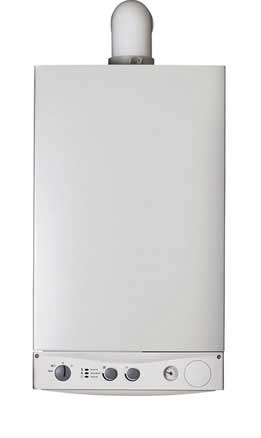
The label is behind the front panel. ATAG name their ranges with a lower case i and a letter, and that letter tells you how your hot water is made.
ATAG name the range, then the output. An iC Economiser 27 is an iC Economiser rated 27 kilowatts.
If yours is an iS or an iR, there is stored hot water somewhere in the property and the cylinder is as likely to be the fault as the boiler is.
ATAG have revised the i Series across several generations, and the fault code set changed with them. The manufacturer publishes one guide for the earlier boilers and a separate one for those made from 2019 onwards.
What that means in practice: the codes on this page are the ones most commonly seen on the iC Economiser and its contemporaries. A newer boiler may number some faults differently even where the underlying problem is the same.
What does not change: the spanner and the bell. The symbol system runs across the generations, so even where the number is unfamiliar, the symbol still tells you whether the boiler has stopped.
What to do: give us the model and the year it went in if you know it. Between those we get to the right table rather than a general one.
With two published code sets and several revisions of the same range names, the name on the front is not enough to work from on this brand.
The serial number and GC number on the label identify exactly which generation is on your wall, which decides both the fault table and the parts list.
Read us the whole label when you ring, not just the range name. It takes ten seconds and on an ATAG it settles the generation question in one step. It is true of all the makes we cover, not just this one.
London is a hard water city almost everywhere, and that is the single biggest difference between repairing an ATAG here and repairing one in Manchester or Glasgow.
Roughly 277 milligrams of calcium carbonate per litre is the London average, with districts running from about 250 to over 350. The chalk comes from the Chilterns and the North Downs, which the Thames and the Lea both pass through on the way here. For a combi the consequence is specific rather than general: scale builds in the plate heat exchanger, and it builds faster than the service schedule assumes.
It is the same story in Fulham and Parsons Green as it is in Epsom and Ewell. The water is hard, the plate heat exchanger scales, and the only question is whether anybody checks it before condemning the boiler.
Hardness is not uniform, and it does not follow borough boundaries. It varies by supply zone and can change over a short distance, so your supplier publishes a figure for your own postcode and it is worth reading before anybody guesses.
Scale drops out of solution faster the hotter the water gets. A combi set to deliver taps at 65 degrees furs up its plate heat exchanger noticeably faster than one set to 50, which is still hot enough to scald. Turning that dial down costs nothing and is the most effective thing a householder in a hard water area can do. This applies to the tap setting, not to a cylinder, which must reach 60 degrees for safety.
Plenty of London houses still store their hot water, and a combi is not a substitute for it.
Most firms here are combi-only, which does not suit a city with this many larger properties. A ATAG system or heat only boiler runs a stored cylinder with its own thermostat, immersion element and, if unvented, its own safety devices. When the hot water goes the boiler takes the blame, and more often than not the boiler is fine and the fault is in the cupboard.
The cylinder sensor is a small part in a pocket on the tank, and when it fails the boiler simply stops heating your stored water while the heating carries on faultlessly. Inexpensive, quick, and invisible to anybody looking only at the boiler.
The motorised valve routes heat to the radiators or the cylinder. A failed motor or microswitch produces heating without hot water, or the reverse, or both running when you asked for one. The head normally changes without draining the system.
The immersion element scales until it trips or stops. It is worth testing rather than assuming, because an element costs far less than a tank. Across the larger properties in Richmond and Twickenham a scale reducer usually goes in at the same time.
An unvented cylinder runs at mains pressure and is protected by an expansion vessel, a pressure reducing valve, an expansion relief valve and a temperature and pressure relief valve, discharging through a tundish. If water is running at that tundish, one of those devices has failed. It is not something to leave and certainly not something to cap.
Unvented work is notifiable and needs a G3 qualification alongside Gas Safe registration. Our engineers carry both, which keeps the boiler side and the cylinder side on one visit. That is the reason unvented cylinder repair sits with the boiler work here.
People swap a cylinder for a combi to gain a cupboard, then ask us to put it back. A combi makes hot water as it flows rather than holding a tankful, so two showers at once is beyond it whatever the badge claims. In a three bathroom house, keeping the cylinder is usually the honest recommendation, replacing it if it is tired rather than taking it out.

We would rather tell you a boiler is worth keeping than sell you one you do not need. Age alone does not decide it. Which part has failed decides it.
| What has failed | Under 8 years | 8 to 14 years | 15 years and older |
|---|---|---|---|
| Flow, return and T3 sensors | Repair | Repair | Repair if parts exist |
| Pressure sensor | Repair | Repair | Repair if parts exist |
| Expansion vessel, pump | Repair | Repair | Repair |
| Fan | Repair | Repair | Depends on the rest of the boiler |
| Ignition electrodes, gas valve | Repair | Repair | Repair if the part is still made |
| Diverter valve, plate heat exchanger | Repair | Repair | Repair if the part is still made |
| Control unit | Check the guarantee first | Borderline, we will be straight with you | Usually replace |
| Main heat exchanger | Guarantee claim if registered | Worth a second opinion | Worth a second opinion |
Parts are all current, and at this age a fault is almost always one component rather than an appliance reaching the end. A sensor, electrode, fan or pump on a six year old iC is a repair, without qualification.
The guarantee matters more on this make than most. ATAG register guarantees for a set term from installation and the terms run longer than many people assume, so a boiler that feels well past cover often is not. You need the serial number from the label, and it is worth two minutes before you spend anything, including with us.
Anybody quoting a new boiler at this age should be asked which component went, and what that component costs alone.
Still a clear repair: flow, return and T3 sensors, pressure sensor, electrodes, fan, pump, expansion vessel. ATAG's habit of giving each sensor its own code means these get identified quickly rather than guessed at, which keeps the bills down.
The one to be careful about: code 151 covers both a fan speed problem and a control unit fault. Those are very different costs, and a quote for a control unit off the back of a 151 should follow a test rather than an assumption.
The conversation changes with a genuine control unit failure or a second significant fault inside a year. At that point the arithmetic starts to favour replacing the boiler.
Availability starts to take over from cost here as it does on any make, and the earlier generations of the i Series are where that begins to bite.
ATAG are a smaller presence in the UK than the volume brands, so it is worth establishing availability before anybody charges to attend, because a diagnosis that names an unobtainable part has told you nothing you can act on.
Against that, these are well built boilers and plenty reach this age in good order with nothing more than annual servicing. We will tell you whether the part still exists before you spend anything. Our guide to repair and replacement costs sets out what actually drives the figure.
Boiler problem? We're here 24/7
Emergency boiler repairs across London, north and south of the river
Call 0203 868 6134London, north and south of the river. These are the districts we work in most.
These are where we work most, not a boundary. An engineer attends anywhere in north London and south London. Tell us where you are and we will say plainly when we can get to you.
If you smell gas: do not touch any switches. Open the windows, leave the property, then call the National Gas Emergency Service on 0800 111 999. That line is free and open 24 hours. Call them before you call us.
If a carbon monoxide alarm is sounding: get everyone out immediately, then call 999 if anyone feels unwell. Do not go back in until the property has been ventilated and checked.
If the boiler locks out repeatedly: try one reset. If it locks out again straight away, stop. Repeated resets hide a fault that is still there, and on a gas appliance that is not a risk worth taking.
Under the Gas Safety (Installation and Use) Regulations 1998, only a Gas Safe registered engineer may work on gas appliances. Never open the boiler casing yourself.
A spanner beside the code means a blocking message. The error is temporary, and the boiler may clear it by itself once conditions improve, or lock out after several attempts if they do not. A bell symbol means the boiler has already locked out and can only be brought back by a reset, usually with an engineer dealing with the cause. A spanner is effectively a bell in waiting, so seeing one while you still have heating is a good reason to book at a convenient time rather than an urgent one.
118 means either that pressure has fallen below 1 bar or that the boiler cannot detect the pump raising pressure. Read the gauge to tell them apart. ATAG's own target is around 1.0 to 1.2 bar cold, so if the gauge sits there and 118 is still showing, this is the pump or the sensor rather than the water. If the gauge is genuinely low, top up through the filling loop with the system cold and reset once. Repeated dropping means a leak rather than something to keep refilling.
Nothing. 105 is the venting programme, which runs when the power is turned on or has been interrupted and takes roughly seven minutes. If your boiler is showing it after a power cut, a tripped breaker or somebody switching it off at the spur, the answer is to wait. Two other numbers are also not faults: 180 appears briefly when an engineer leaves the chimney sweep function and 181 when they leave commissioning mode, so if somebody has just serviced it, that is them.
Not if the system is hot. Water expands when heated, so ATAG's own guidance is that pressure should sit around 1.0 to 1.2 bar cold and rising to somewhere between 1.8 and 2.4 bar when the system is hot is normal. Check the gauge with the heating off and the system cold, ideally in the morning. What is not normal is above 3 bar, which the boiler reports as code 117, or pressure that climbs steadily over days rather than rising and falling with use.
It depends on the model, and on several it is not the braided hose people expect. On iC and iC Economiser Plus models it is a rigid copper U shaped tube with a nut at each end, fitted on the underside of the boiler. On the iS range it is more often a braided flexible hose on the pipework with one or two taps. Turn off any clocks and thermostats first, then fill slowly with the system cold to about 1.0 to 1.2 bar, because it is easy to overshoot into a high pressure fault.
Your ATAG has a diagnostic menu. Hold the Eco button for about six seconds, then tap the plus button to scroll through the A menu. A6 shows the system water pressure digitally and A2 shows the hot water temperature. That is useful when the analogue gauge under the boiler is hard to see or hard to reach, and the pressure is also shown in the top right of the display when a fault code comes up.
The label is behind the front panel. ATAG name the range then the output, so an iC Economiser 27 is rated 27 kilowatts. The letter tells you the type: iC is a combi, iC Economiser adds a small internal store, iS is a system boiler and iR is heat only, so anything other than iC means there is a hot water cylinder somewhere. Read us the serial from the label when you ring, because ATAG publish one code set for earlier boilers and another for those made from 2019 onwards. We work on every make of boiler.
The truthful answer is that it depends, and anyone who gives you a fixed price before asking what the boiler is doing is guessing at your expense. What moves the number: which component failed, its availability, and how long the job takes once we are there. On an ATAG the symbol beside the number tells us whether it has locked out, which decides how urgently anybody needs to attend. The rate is agreed beforehand and parts we fit are guaranteed for a year, so nothing is carried out on the assumption that you will approve it afterwards. There is no charge for telling you a repair is not the right call. Our guide to repair and replacement costs sets out what actually drives the figure.
ATAG is one of very few makes that uses a symbol as well as a number, so you can tell at a glance whether the boiler has stopped or is warning you.
No gas supply? Plenty of London flats run without one, and we also cover electric boiler repair.
Before you book anything, check whether your ATAG is showing 105, 180 or 181, because none of those is a fault. Otherwise read us the number, the symbol beside it and the model from the label.
Gas Safe registered. Unvented cylinder qualified. Parts guaranteed for a year. Covering London, north and south of the river, 24 hours a day.